A coaching career shaped by club decisions
Vincenzo Montella’s career has taken him from a Roma title winning side to the touchline at Milan and, most recently, the Turkiye national team. His reflections point to a familiar divide in football management: a coach can set the direction, but the club’s decisions determine how far the plan can go. That divide matters because a manager is judged on results even when recruitment, budgets and authority sit elsewhere. Montella’s account is a reminder that the work on the training pitch can’t be separated from the conditions created above it.
Montella is now a free agent after Turkiye dismissed him following a run of defeats in the Nations League. His tenure had also brought qualification for the Nations League A and the 2026 World Cup, after Turkiye arrived worried about reaching the European Championship. Those achievements and the poor finish sit side by side, leaving a mixed record rather than a simple verdict. In international football, where competitive windows are limited, a short run of results can quickly reshape how a longer spell is remembered.
“When I arrived, they were afraid that they wouldn’t qualify for the European Championships, but we did it, and then got into the World Cup and the Nations League A,” Montella told La Gazzetta dello Sport. “Naturally, the end to this experience hurt, but at times unpredictable things can happen in football.” His phrasing acknowledges the pain of the dismissal without disputing the outcomes that preceded it. That distinction is useful: qualification is evidence of progress, while a losing run can still be enough to end a coach’s tenure.
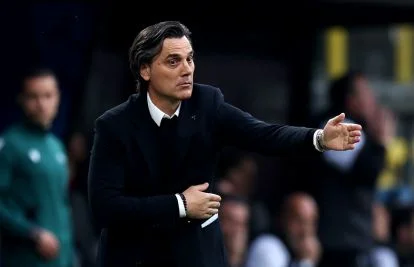
Milan’s plans left Montella short of a striker
Milan represented a childhood ambition for Montella, who grew up watching Marco van Basten. His 2016 appointment brought him to a club led by Silvio Berlusconi, whom he describes as courteous but inclined to weigh in on team decisions. The personal appeal of the job, then, came with a complicated working structure: the manager had responsibility for the team but did not always control the choices that shaped it. That tension is common at prominent clubs, where owners and executives may have their own expectations about the squad.
Montella says Berlusconi expected a squad with the star power of the club’s past, while the available players couldn’t match that standard. He joked that signing a Ballon d’Or winner might help him play more attacking football. The joke also points to a practical limit on a coach’s preferred style: ambition on the touchline can’t make up for a gap between the players at hand and the players a system requires. A club’s history can raise expectations, but it doesn’t automatically provide the personnel to meet them.
The deeper problem, in Montella’s telling, was a club without a clear transfer plan. A change of ownership and a stream of new arrivals made his second season particularly disorderly, while decisions were sometimes made without consulting him. When Milan needed a striker, he says, he was told the transfer budget had already been spent. Here’s the thing: recruitment isn’t just a matter of adding names to a squad. Timing, role and fit all affect whether arrivals help a coach solve the problems already visible on the pitch.
That context helps explain why Montella dismissed summer speculation linking Cristiano Ronaldo with Milan. “I never believed in that, it seemed more like Fantasy Football,” he said. A rumour about a famous player can attract attention while saying little about what a club is actually able or prepared to do. In Montella’s account, the more revealing question wasn’t whether a headline signing could be imagined, but whether Milan had a coherent plan for the position it needed to fill.
Roma remains close to home
Roma was central to Montella’s playing career and gave him his senior coaching debut at just 36. He says watching matches from the bench had already drawn him toward coaching, but taking charge opened up an entirely new way of understanding the game. Playing and managing demand different kinds of attention: a player experiences the contest from within it, while a coach has to assess patterns, make choices and answer for the whole side. His transition also began inside a club he knew well, adding personal history to the job.
His affection for the club is clear in his assessment of Gian Piero Gasperini’s current side. Montella believes Roma can stay in the Scudetto race, and tipped Donyell Malen to finish as Serie A’s leading scorer if his form continues. That forecast comes with a condition: sustained form is what turns a promising spell into a season long contribution. After Malen scored four in one game, Montella recalled his own four goal haul in the Rome derby, while noting that Alessandro Nesta marked him that day. A rare match links the current side to a vivid memory from his own career.
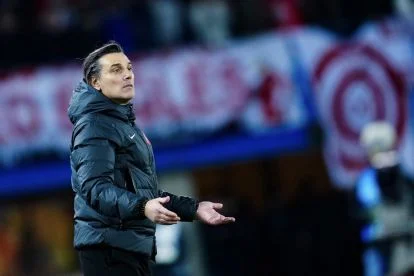
Roma’s last Scudetto came in 2001, with Montella, Francesco Totti and Gabriel Batistuta in the squad and Fabio Capello as coach. The celebrations the next day took place at Montella’s house. Capello hadn’t been invited, but turned up anyway; Montella joked that he would have made him run around the building before letting him in. It’s a light story, but it also captures the familiarity and informality of a squad celebrating a major achievement together.

There’s a more serious note beneath the story. “I do think I owe Capello an apology, at times I didn’t behave professionally, and I regret that.” For Montella, Roma’s past still carries a personal debt, while the current team offers a fresh reason to watch the title race closely. His admission gives the nostalgia some edge: the memories aren’t only trophies and jokes, but also a chance to reconsider how he acted at the time.
What Montella’s account says about the job
This is more significant than it looks: Montella’s recollections repeatedly return to the space between a coach’s responsibility and a club’s control. At Milan, he describes transfer choices that limited his options; with Turkiye, he points to qualification achievements alongside a painful ending. Neither account, on its own, settles how much credit or blame belongs to the manager. They do show why judging a tenure by its final stretch can obscure the conditions and results that came before it.
If you’re working in this space, the practical lesson is familiar but often ignored: a team’s direction depends on whether recruitment, authority and tactical aims line up. (And this is the part most people overlook.) A coach can explain the mismatch, but the explanation doesn’t erase responsibility for results. The gap between what a manager wants and what a club enables can define the job. That said, Montella’s willingness to revisit both professional frustrations and personal regret makes his account more revealing than a simple defence of his record.