Antonio Conte wants to finish what he started in Turin. In an interview with Cronache di Spogliatoio, he said he expects to go back to Juventus, and that's a line supporters will read closely. Managers say things like this all the time, and most of it is noise. Conte's version carries more weight, though, and you can see why once you look at the history.
The history explains the weight of it. Conte spent more than a decade at Juventus as a player, then won three consecutive league titles as head coach. It's also the only club or national team where he has stayed more than two years in charge. Leaving something unfinished clearly still bothers him. Here's the thing: a run of titles followed by an exit leaves a particular kind of itch, and that's the itch he's describing. Sports media loves to romanticize unfinished business, so it's worth reading his comments as a statement of intent rather than a promise.
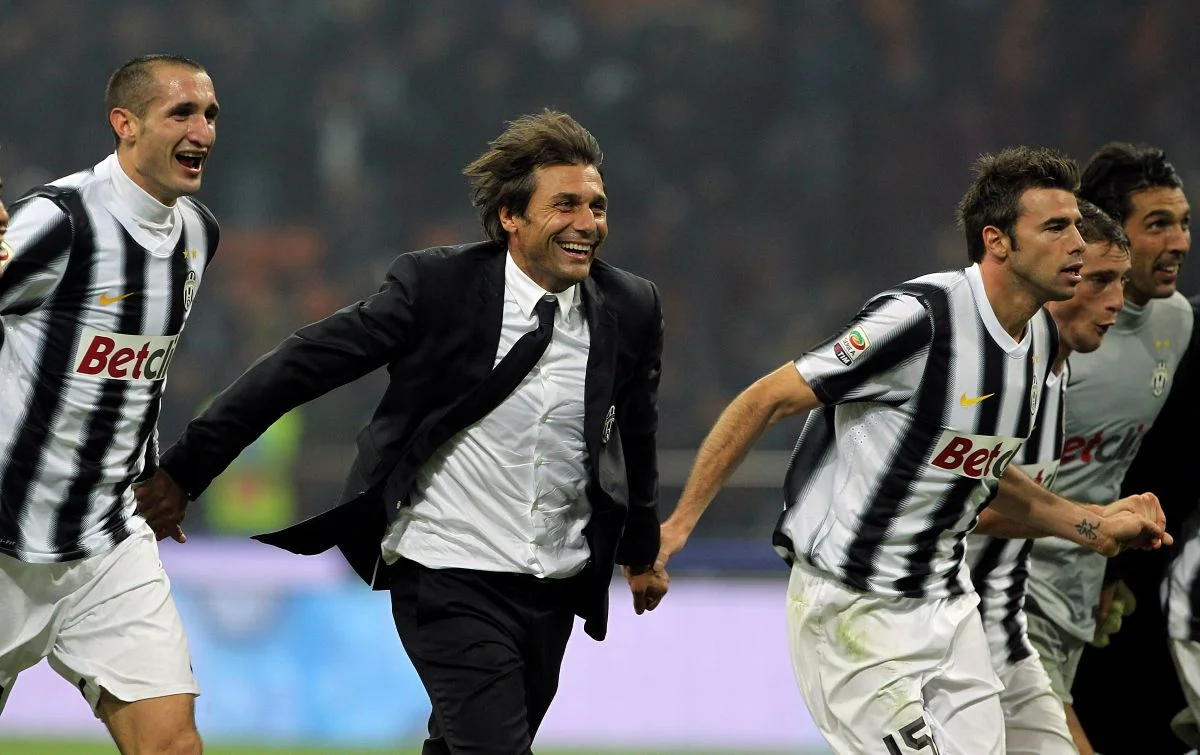
Two near misses
"I think that sooner or later the circle will close," Conte said. "I know I left something behind and I know that eventually the circle will be closed with Juventus." That's a deliberate choice of words. He isn't talking about a vague affection for the club; he's framing a return as something unfinished that he expects to resolve. Statements like this are easy to make and hard to test, because they depend on two parties wanting the same thing at the same moment.
He's been close before, and he laid out exactly how it fell apart. "There have been moments in the past where we could have reunited, but it's been difficult because two things have to align." When Juventus hired Maurizio Sarri, Conte was available, but he ended up at Inter. Later, as Giuntoli arrived, Conte was free again. Giuntoli went for Motta, and Conte joined Napoli.
Read that sequence twice and a pattern emerges. Conte's availability and Juventus's appetite have never lined up at the same time, and that's the real story here. (And this is the part most people overlook: each near miss was a club making a decision, not a failed negotiation with Conte.) If you're a Juventus fan, that distinction matters. It means the obstacle has been the club's timing, not his willingness to return.
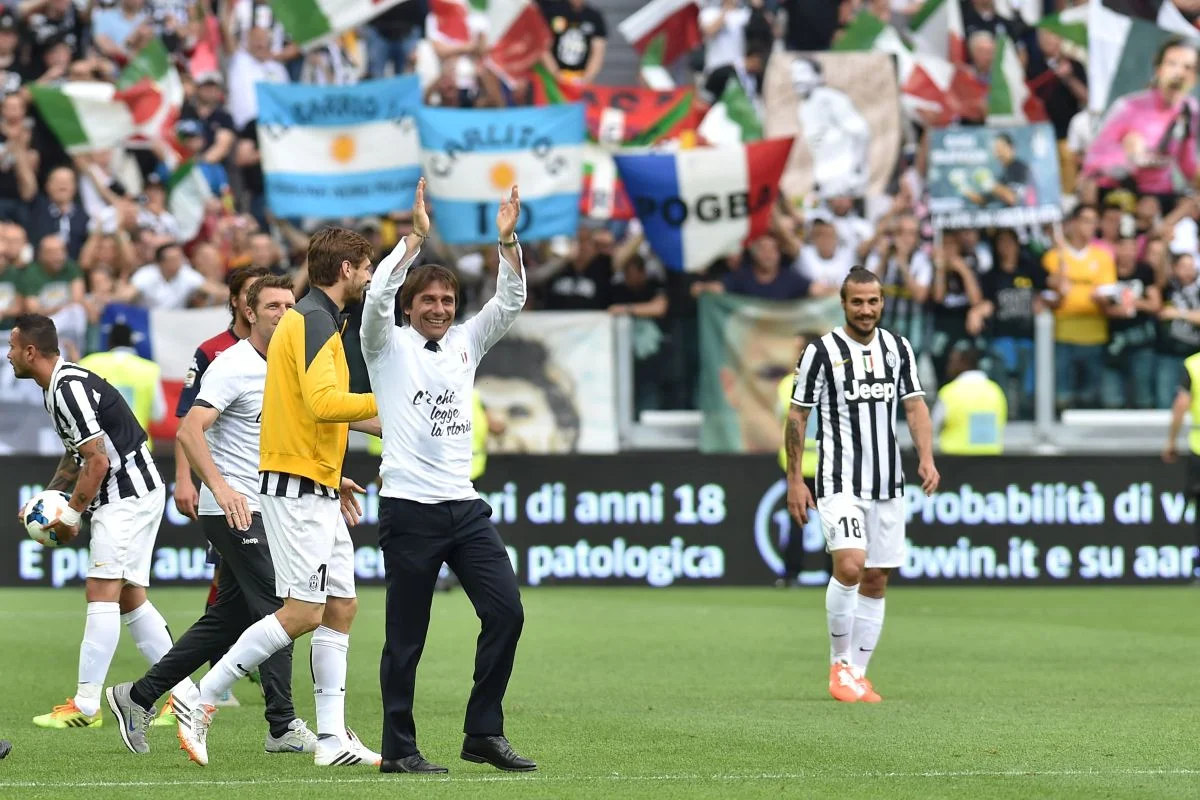
The caption on that second photo points to a 102-point championship in May 2014. That's the reference point supporters carry around. Any return will be measured against that era, not against whatever squad Juventus is fielding today. It's a high bar, and it's the reason his name keeps coming up whenever the club's results dip.
The two-part condition
Here's the catch: Conte is available right now, but Juventus aren't looking for a coach. Luciano Spalletti remains in charge, and that's the blocker. Conte can't come back unless the club is actively searching, and that means Spalletti has to go first. Clubs rarely open a managerial search while the incumbent is still under contract, so the sequence is fixed. Conte's availability is only half the equation.
That makes the question more pointed. Spalletti faced growing pressure in Turin before the international break, and results will decide whether the search starts. My read is that the club's next bad run matters more than anything Conte says about the circle closing. If Juventus wobble again, Conte stops being a sentimental option and becomes the obvious call. Pressure on a coach isn't the same thing as a decision to replace him, though.
And yet, that's exactly where the uncertainty sits. Clubs weigh a sacking against cost, timing, and the risk of a worse appointment, and none of those calculations is visible from the outside. What looks like an obvious choice to fans can look like a gamble from the boardroom. That's why the interview, however pointed, tells you less about the future than the next few results will.
Should Juventus bring back Conte?
So would he be the right man? He knows the club, he knows the league, and he has the trophy record to back it up. Those are real advantages, and they're the strongest part of the case. A coach who has already won with this group of players doesn't need a learning period, and that counts for a lot when a season is already under way.
The harder question is whether Juventus want to revisit a relationship that has already split twice. Familiarity cuts both ways. A returning coach brings a known quantity, but he also brings the memory of how the previous chapters ended, and clubs don't always want to reopen old arguments. The more you think about it, the more the sentimental case and the practical case pull in different directions.
Where do you land? Let us know in the comments.
What this means for you
If you're following Juventus closely, the signal to watch isn't the interview. It's the league table, the tone of the press conferences around Spalletti, and whether the club starts talking about the future in the present tense. Those are the markers that tend to come before a change, and they're far more reliable than a manager's comments about where his heart is. Interviews are designed to generate headlines, and that's not a criticism; it's just how the business works.
That said, the story is more significant than it looks on the surface. Conte has turned a personal ambition into a public one, which puts pressure on the club to respond eventually, even if the answer is no. Either way, the outcome will say more about Juventus's appetite for risk than about Conte himself. Whether the circle closes depends on decisions neither of us can see yet, and that's exactly why it's worth watching.