Oddo's argument
Italy isn't short of young talent, according to Massimo Oddo. What it lacks, in his view, is patience, and he thinks Francesco Camarda is the clearest example of what happens without it.
Oddo coached Camarda at Milan Futuro, so he knows the player well. Speaking to La Repubblica, he argued that the striker rushed toward the top flight when he needed a slower, more deliberate route. That's a pointed claim from someone who watched the teenager up close every week. It's also an opinion, and the useful question is whether the evidence backs it. Coaches who've worked with a player have a view that outside observers can't match, but they also have a stake in how that player's story gets told. Keep that in mind as you read the rest.
A precocious start
The early numbers are hard to ignore. By 14, Camarda had scored 485 goals in 89 matches for Milan's youth sides, an average of 5.45 per game. He then became the youngest player ever to feature in Serie A, at 15 years and 260 days. At 16 years and 226 days, he became the youngest Italian to play in the Champions League.
Here's the thing: youth goal tallies are notoriously hard to read. A striker piling in goals against weaker opponents can look like a once-in-a-generation prodigy on paper, and scouts have been fooled by that before. Age-group football varies enormously in quality from one team to the next, so a figure like 5.45 goals a game tells you more about the competition than about the player alone. That doesn't make the record meaningless. It means the record opens a conversation rather than settling one.
Still, the appearance records are a different kind of evidence. Making your debut in Serie A as a 15-year-old means a coach trusted you against grown professionals, and that's not something a youth league can fake. That's where the story starts to get complicated.

The Lecce loan that didn't deliver
Milan sent Camarda to Lecce last season to find regular Serie A minutes. That was the sensible move on paper. A player who has already been a big talent in youth football needs competitive matches against senior defenders, and a loan is the standard way clubs provide them without throwing a teenager into a title race.
He did score. He netted his first top-flight goal and became the club's youngest league scorer, which is a real achievement and not one to wave away. Plenty of teenagers never get a moment like that. The problem was volume. He started only seven Serie A matches, and that's where the loan's value really gets measured. Scoring a memorable goal is one thing; earning the week-to-week trust of a coaching staff is another.

Back at Milan, the picture hasn't improved. Club-record signing Goncalo Ramos sits ahead of him in the pecking order, and the rise of Alphadjo Cisse has further squeezed his chances this season. Those are two different problems. One is a senior striker occupying the space Camarda wants. The other is a fellow young player gaining ground in the same window. For a teenager who wants to play, that's a tough spot, and it's hard to see how patience alone solves it. Waiting for a chance only works if the chance eventually comes.
Why Oddo points to Esposito
Oddo's comparison is Pio Esposito. Esposito spent two years on loan in Serie B before breaking through with Inter and then the Italian national team. Oddo's read is that Camarda was too impatient to skip that stage, and that the grind of Serie B would have built the consistency he's now missing.
That's a reasonable argument, and it's the kind of argument that gets stronger the more you think about it. Serie B is a league where you play every week against physical opponents, often on difficult pitches, and where a bad run can cost you your place. It's a different test from a handful of Serie A cameos, and it tests consistency in a way that a few spectacular goals never will. If you're a young forward, that's exactly the environment where you learn to be the same player on a grey Tuesday night as on a big Saturday afternoon.
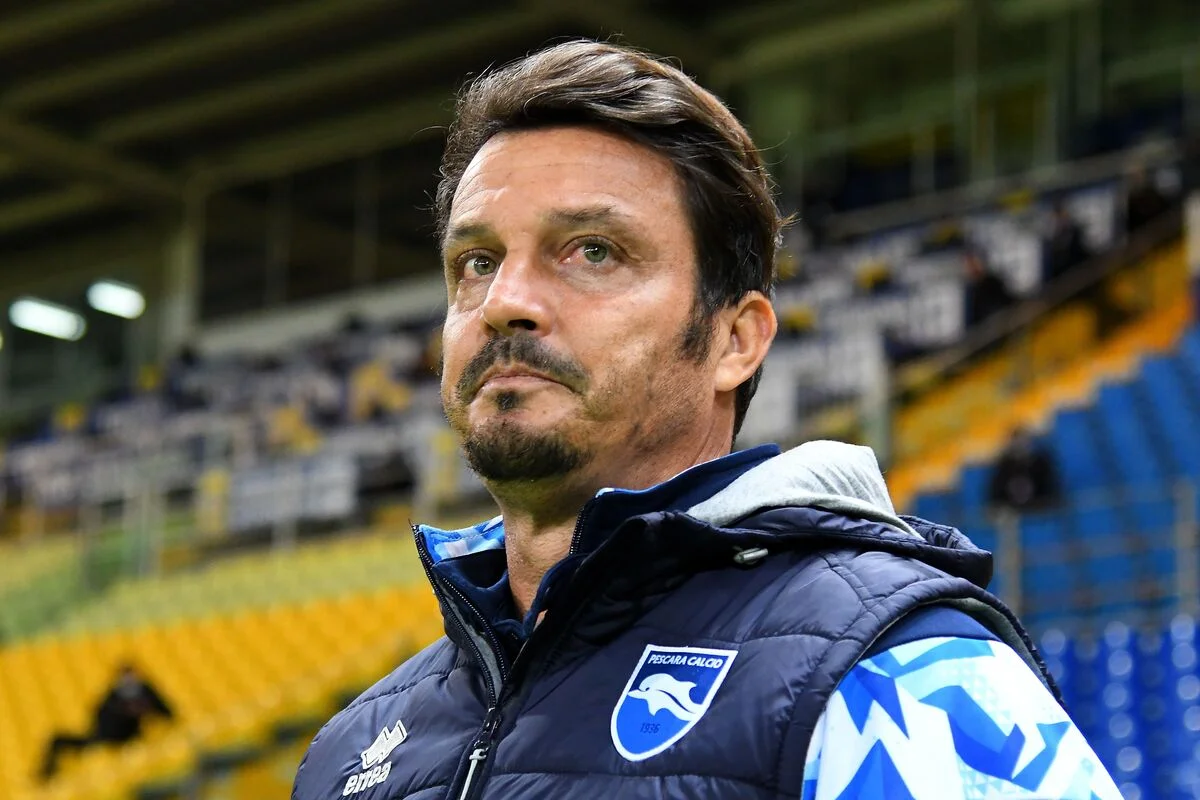
Oddo framed his view in his own words. “The talent hasn’t just disappeared, but you have to be patient. I take Camarda as an example, one of the most promising young strikers I have ever seen,” said Oddo.
Notice what he's doing there. He opens with praise, not criticism, and that's a deliberate choice. Coaches who want to make a point about development usually start by reassuring everyone that the player isn't a write-off. The praise makes the criticism easier to hear, and it also makes the argument harder to dismiss as a dig.
He then made the comparison explicit. “He needed a steadier path, like Pio Esposito.” The line is short, but it carries the whole thesis. Oddo isn't saying Camarda was wrong to join Milan or wrong to take the Lecce loan. He's saying the sequencing was off, and that a longer apprenticeship in a lower division would have served him better.
Oddo's message isn't that Camarda lacks ability. It's that the pathway matters as much as the talent, and that a player this young needs minutes he can build on. Whether Milan or another club gives Camarda that steadier route will tell us a lot about how Italian football handles its teenage stars.
What this means for Italian football
Here's where I'd push back a little. Oddo's argument is sound as a general principle, but it assumes the path is available to choose. For a club like Milan, sending a player down to Serie B is not a neutral decision. It means accepting that a talent you've already invested in won't contribute at the top level for another season or more, and that's a hard sell when the first team is short of options. Patience is easy to recommend from the outside and much harder to fund from the inside.
That said, the case Oddo is making isn't really about Camarda alone. It's a question about how Italian clubs develop young forwards, and whether a system that produces precocious youth scorers also knows what to do with them once they arrive. If you're working in youth development or following Italian football closely, this is the pattern worth watching. Early records get celebrated, then the minutes dry up, and the player either finds a route or drifts.
And yet, the optimistic reading is still available. Camarda is young enough that a dozen different paths could still work. A loan to a club that plays him regularly, a move abroad, or a patient spell in the second tier could each still turn the story around. What matters is whether the next season gives him the consistent minutes that his first two seasons didn't. That's the test, and it won't be settled by one good goal or one bad month.