Alphadjo Cisse’s rapid rise at AC Milan rests on two decisions: the club’s long-term scouting and Ruben Amorim’s willingness to put a young player straight into the first team. The 20-year-old has scored eight goals in 13 Serie A and Europa League appearances this season, then earned his senior Italy debut in a 4-1 Nations League defeat to Belgium. The scoring has made him one of Milan’s most visible young players, but the story behind his arrival shows how much depended on a recruitment plan meeting a coach prepared to act on it.
A profile Milan had tracked for years
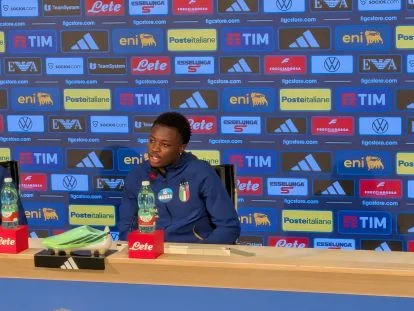
Geoffrey Moncada, Milan’s former director, said a scout first flagged Cisse while he was in Verona’s Under-17 side. The appeal was his unusual versatility: he could operate as a second striker, winger, mezz’ala or No. 10, and shift roles from match to match. That flexibility offered Milan more than a prospect with one clear position. It gave the club a player who might fit different attacking plans, though versatility alone doesn’t tell a coach where he’ll be most effective.
“His ability to change direction was remarkable,” Moncada told the Calcio e Pepe podcast. He also praised Cisse’s capacity to cross with either foot, describing that combination of skills as rare among young Italian players. Those qualities help explain why scouts kept watching: a player who can change direction sharply and deliver from either side can create problems in more than one part of the pitch. The harder question, as with any young talent, is whether those traits hold up against senior opposition.
After Verona sent Cisse on loan to Serie B club Catanzaro, his performances drew wider attention. PSV Eindhoven came close to an agreement, leaving Milan to accelerate a pursuit it had already been following for several years. The sequence matters. Milan wasn’t making a sudden bet based only on a burst of attention; it had a prior scouting interest, while Cisse’s time at Catanzaro gave other clubs a clearer reason to compete.
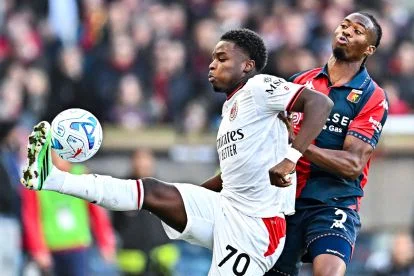
Moncada said Milan feared that a Champions League appearance with PSV could push Cisse’s price to €30–40 million. The club also couldn’t offer the regular starting role PSV could promise. Milan’s name, he said, carried particular weight with the player and his family. That left the Italian club balancing two disadvantages: it couldn’t match PSV’s immediate guarantee of minutes, and it faced the possibility of a higher fee if the rival’s European campaign raised Cisse’s profile.
“As soon as he heard our name, he made his decision. He knew what he wanted,” Moncada said. That preference helped Milan compete where its practical offer was weaker. Still, a player’s choice is only the beginning of the calculation. The club had to provide a path into the team, and the coach’s decisions would determine whether the move became an opportunity or a promise left on paper.
Amorim’s willingness to back the move

Cisse’s immediate influence was less predictable than Milan’s interest in him. Moncada credited Amorim with backing the youngster from pre-season, despite the risk of moving a player from Catanzaro into Milan’s starting XI after the club missed out on Champions League football last season. That’s a demanding step: a young player must adapt to a higher level while the team has its own expectations and pressure. Amorim’s decision gave Cisse a chance to make that adjustment in the first team rather than wait for an opening to appear.
He pointed to Amorim’s earlier use of Patrick Dorgu at Manchester United: first as a left-back, then on the right wing in the Premier League. Moncada called that willingness to change a player’s role “courage.” The comparison suggests a coaching approach that treats position as something to test, not simply assign. For Cisse, whose value at Verona was partly tied to his ability to move between roles, that flexibility could be an advantage; it could also make clarity about his best position harder to establish.
Cisse’s early scoring run and Italy debut suggest the same readiness to trust him is already shaping Milan’s season. Eight goals in 13 appearances is a strong return, but a short run can’t settle the larger question of consistency. The Italy debut adds another marker of how quickly his status has changed, even though it came in a heavy defeat. A landmark appearance and a difficult team result can coexist.
What Cisse’s rise could mean for Milan
This is more significant than it looks. Milan’s recruitment identified a player with several possible roles, and Amorim has given him a route into the first team; together, those choices show how scouting only becomes valuable when the coaching staff is willing to use what it finds. If you’re working in this space, the practical lesson is familiar: identifying potential is the beginning, while defining responsibilities and earning minutes determine whether that potential turns into contribution.
And yet, Cisse’s versatility shouldn’t become an excuse to expect him to solve several problems at once. A young attacker may need time in a consistent role, and his early scoring doesn’t prove that every position will suit him equally well. (And this is the part most people overlook.) A club can praise adaptability while still needing to make deliberate choices about where a player learns the most and helps the team most.
For now, Milan has evidence that its bet is working: Cisse has scored regularly, entered the senior Italy setup and earned the coach’s trust. The next measure is whether those signs persist as opponents adjust and the demands of a full season accumulate. No guarantees. That’s the point: his rise looks promising, but Milan’s handling of the next stage will matter as much as the scouting that brought him there.