Igli Tare's time at Milan lasted less than a year, and he's now explaining what went wrong from the inside. His account is less about the sacking itself than about the structure he was handed, the coach he chose, and a dressing room that he says lost its way in the spring.
A role that had been empty for a while
Tare arrived as director of sport, a post that had sat vacant at Milan since the departures of Paolo Maldini and Ricky Massara in 2023. The former Lazio chief didn't get anywhere near a full season. On May 25, the club dismissed him alongside coach Massimiliano Allegri, CEO Giorgio Furlani and director Geoffrey Moncada in a single, blunt press statement. There was no lengthy handover and no soft landing.
What stands out now is how Tare frames the failure. He doesn't argue that the project was doomed from the start. He argues that the team needed more time than the club was willing to give it.
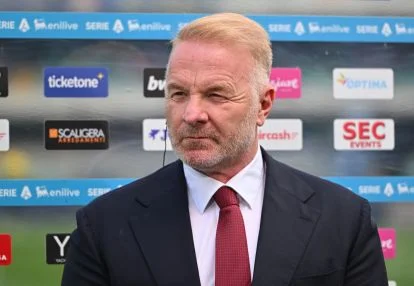
Missing the Champions League still hurts
Start with the obvious wound. Milan missed out on Europe's premier competition, and Tare doesn't soften it. "The wound of failing to qualify for the Champions League is still deep, enormous in fact," he told Sky Sport Italia's Calcio Unplugged.
His point about the club's standing is worth pausing on. "If I come to a club like Milan with the target of getting into the Champions League, then I don't know where I am," he said. "This is the most successful club in Italian football history, and after Real Madrid it is the most important in the world." Anyone who has watched Milan's recruitment over the past few seasons will recognise that tension. Ambition at this level isn't optional, and a missed target carries a cost beyond the league table.
Tare also points to what went wrong in the final weeks. Milan lost the Coppa Italia final and fell out of Europe altogether, and he says that hit morale hard. Yet by his account, the squad had been first or second in the table until the end of March and early April, despite difficult circumstances. Then, across the last ten rounds, the mentality collapsed. He declined to go into the "other issues" behind that collapse, but he was clear they had an effect.
The Allegri decision
Choosing the coach was one of Tare's central responsibilities, and his explanation says a lot about the brief he was given. "When I arrived, the only thing I was asked was to hire an Italian coach, not a foreign one," he said. He had some foreign candidates in mind, but the experiences with Sergio Conceição and Paulo Fonseca had shown the club what it didn't want. That left a familiar name.
Tare's reasoning rests on Allegri's record and his bond with the club. "Allegri won a lot as a coach, Milan is special to him, he won the Scudetto there first, so of course he was sad at the way it ended." He also drew a wider comparison, noting that Zlatan Ibrahimović and Alessandro Nesta had strong careers elsewhere but still single out Milan. "I can confirm it's true," Tare added.
The sentiment is understandable. The decision still looks like a bet on continuity in a squad that needed something different, and the season ended with that bet unpaid. Tare admits he shares some of the responsibility. "I admit we too deserve some of the blame, because Max and I should've paid more attention to certain dynamics, be more present with the squad to get the season over the line."
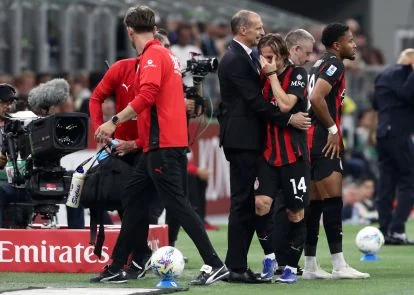
Cardinale, and the line that never connected
The most striking part of Tare's interview concerns the ownership. He was brought in as director of sport, yet he says he never had a direct channel to the man controlling the budget. The RedBird figurehead, Gerry Cardinale, was initially distant, and only after the club's clear-out did he move toward a far more hands-on style. Tare's account suggests that shift came too late for him.
He recalls the negotiations over Ardon Jashari as the moment the owner seemed engaged. "I remember when we were in negotiations for Ardon Jashari, he called and wanted to understand what was happening. He said 'if you need to spend a little more, just let me know, and I'm ready.'" The offer was clear, but the conversation never repeated. "I never got the chance to speak with him directly again, because there were people above me I didn't want to over-ride."
Tare's read on why is more generous than you might expect. He thinks Cardinale is learning a new kind of job. "I think this is a new experience for Cardinale, he is used to other sports in America, but now he has taken on the responsibility at Milan." He also said he'd have wanted that presence earlier. "I would've preferred to have that presence when I was still at Milan, as it would've been very useful, but better late than never for the good of the club."
That line lands hard because it describes a governance problem, not a personality clash. A sporting director who can't reach the owner, while the owner is figuring out the job, is working with one hand tied. Tare's public verdict on the leadership is blunt, too: "I am disappointed that those leading the club didn't understand people needed to be given time, something that they are now doing better."
He also said that a direct conversation would have helped everyone, not just him. The club's new hands-on direction could make that happen next time, if it sticks.
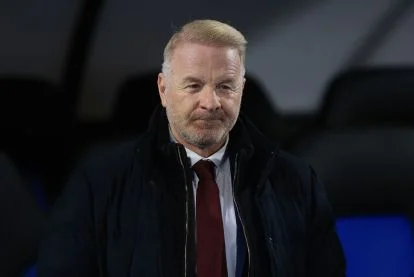
Building a squad takes more than one window
Tare's frustration with the timeline is easy to understand. "I'd say you need several transfer market sessions to get a team that is competitive and ready to win," he said. Milan sold players for significant fees and brought in ten new faces, which means the squad was effectively rebuilt in a single cycle. Integrating that many arrivals, and forging a unified group out of them, takes time that the club didn't allow.
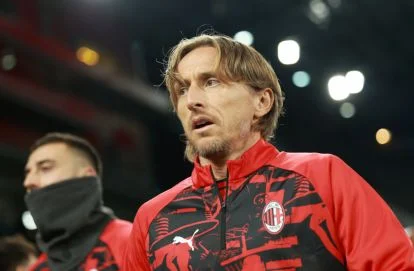
On the leadership question, Tare pointed to Luka Modric. The Ballon d'Or winner arrived as a free agent after his time at Real Madrid, and Tare's aim was to pair him with another proven figure. "I had the sensation this squad lacked leadership. The idea along with Modric was to sign Granit Xhaka, who at the time was the captain of Bayer Leverkusen, to guide the others. Luka is more silent in his attitude on the pitch." The plan points to a clear diagnosis: Milan had talent but needed vocal guidance in the dressing room, and Modric's quiet style wasn't going to supply it alone.
Pulisic and the goal drought
This is where Tare's comments get sharpest. Asked about individual performances, he named Christian Pulisic as the biggest disappointment of his time in charge. "I expected more from him in terms of responsibility and leadership. He's a great player, but some things happened that I had never experienced in my career."
The numbers he cited are stark. Pulisic didn't score for six months, and Santiago Giménez didn't find the net either. Tare doesn't pretend that's a minor detail. "I guess these things happen in football, but when you have a drought that long, it ends up affecting the whole team's performance." That's the real cost of the forward problem. A scoring slump in the front line doesn't stay contained. It drags on the midfield's confidence, the defence's patience, and ultimately the mentality he described as collapsing in the final stretch.
Tare's comments on Pulisic also hint at tension behind the scenes, though he stops short of spelling it out. He framed the issue as one of responsibility, the kind of thing a senior player is expected to carry when results turn. Whether that gap was about training, form, or dressing-room dynamics, he hasn't said, and it's the part of his story that would most reward a follow-up.
What comes next for Milan
Tare's account doesn't read as a settling of scores. It reads as a post-mortem with a clear thesis: Milan rebuilt too fast, leaned on a familiar coach, lacked a leadership core on the pitch, and had an owner who wasn't yet embedded in the day-to-day decisions. Each of those points is specific, and each one points at something the club can fix.
My read is that the owner's shift toward a hands-on role is the most important development in the whole interview. If Cardinale now sits close to the football operation, the lessons Tare draws could shape the next appointment more than any single transfer. The question is whether the next sporting director gets the direct line Tare never had, and whether the squad that follows has the vocal leaders he thought it was missing.