Djed Spence’s first goal contribution for Inter came in a performance that helped shape their 3-0 Champions League win over Feyenoord. UEFA named him Player of the Match after he helped create the opening two goals from the right, even though the official record credits him with only one assist. The distinction matters: an assist is a narrow statistical judgment, while Spence’s influence extended across the moves that put Inter in control.
His delivery for Yann Bisseck’s opener counts as the assist. A deflection sent another Spence pass onto Francesco Pio Esposito’s head for Inter’s second, but that play didn’t register as an official assist. Spence nearly set up Esposito again, though the effort was ruled out for offside, and Piotr Zielinski completed the scoring. The sequence shows how a player can shape a match without every useful action appearing in the box score.
A delayed start, then a decisive display
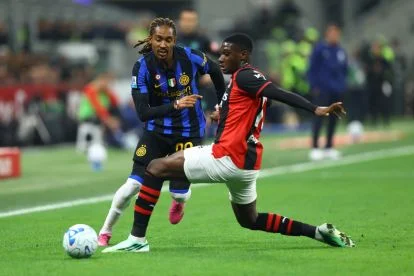
“Grateful for the win, I’m happy with my performance, I’m just happy,” Spence told Inter TV. He said he was adapting well after the team and manager welcomed him, and hoped to help the squad while receiving their support in return. The comments were measured, but they point to a practical part of settling into a new team: a player needs both a role on the pitch and trust from the people around him.
That welcome has had to accompany a stop-start introduction. The former Tottenham Hotspur player joined as a less costly option for Inter’s right wing-back role after Chelsea outbid the club for its first choice, Atalanta’s Marco Palestra. Injuries following the World Cup delayed Spence’s Inter debut until October 10, leaving him to build familiarity with the team later than planned. The Feyenoord match was only his third start.

It was also his first goal contribution for Inter. Across 16 earlier European appearances for Tottenham and Rennes, he hadn’t recorded an assist. That record gives the Feyenoord performance a useful point of comparison, though it shouldn’t be treated as proof of a sudden transformation: one match can show what a player offers in a particular role, but it can’t establish consistency.

What the wing-back role asks of him
The UEFA Technical Observer Group cited Spence’s impact in the opening 35 minutes: two right-sided deliveries helped Inter build an early lead, while his passing accuracy and pace stood out within Cristian Chivu’s 3-5-2 system. Those traits matter in a wing-back role because the position asks a player to contribute to attacks from wide areas while remaining part of the team’s broader shape. A good delivery can change a possession into a scoring chance; the timing and quality of the run that creates the delivery matter too.
Here’s the thing: the first half’s influence is a stronger argument for Spence’s value than the assist tally alone. The second goal involved a deflection, and the near-assist was ruled out for offside, but both actions suggest he was repeatedly finding routes to affect the attack. (And this is the part most people overlook.) The official record can describe the final touch while missing the pressure a player puts on a defense through repeated forward runs and accurate passing.
A promising signal, with more to prove
For a player whose Inter start was delayed and whose European assist record was blank, Rotterdam offered a clear sign of what he can add from the wing-back position. This is more significant than it looks: Inter got a decisive contribution from a player still early in his run of starts, in a system where his pace and delivery can influence the attack. If you’re assessing his fit, the key question is whether he can reproduce that involvement across more matches.
One strong European night is a useful reference point, not a settled verdict. Spence has shown that he can help generate danger from the right and that he is adapting to Chivu’s setup. The next step is consistency. For Inter, that would make his contribution meaningful beyond the distinction and the first assist.