Seven players from Serie A have been named in Lionel Scaloni’s Argentina squad for November’s friendlies, giving Roma, Como, Fiorentina and Parma a notable presence. The selections cover defence, midfield and attack, while injuries and a suspension have ruled out several familiar names. That mix makes the announcement relevant to both the national team and the Italian clubs preparing for the next stretch of their season.
Serie A selections and absences
Roma supply three of the seven players: defender Leonardo Balerdi and forwards Matias Soulé and Santiago Castro. Como midfielders Nico Paz and Maximo Perrone join them, along with Fiorentina forward Franco Mastantuono and Parma defender Mariano Troilo. The spread across four clubs gives Serie A a visible place in the squad, even though the selections are concentrated in a small group of teams.
The positions matter as much as the count. Balerdi and Troilo add defensive options, Paz and Perrone offer midfield depth, and the four forwards give Scaloni several attacking profiles to assess. A call-up doesn't guarantee a starting role, of course, but it puts each player into the coach’s working group for these fixtures and gives them an opportunity to make their case in training and matches.
Several absences also shape the picture. Nahuel Molina remains unavailable because of a ban tied to events after the World Cup final, and he’ll stay with Roma. Injured teammate Paulo Dybala will also remain at the club. Nico Gonzalez and Inter captain Lautaro Martinez are absent through injury, leaving Scaloni without established options in attack.
Those omissions make the new selections more consequential. The call-ups don't, by themselves, tell us how Argentina will redistribute minutes or responsibilities, but they create room for other players to be evaluated. This is more significant than it looks: international squads are built around availability as well as preference, and the balance between the two can affect who gets a meaningful chance.
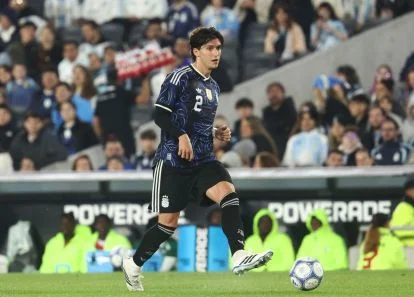
The accompanying report says Balerdi and Soulé are expected to start on the bench for Roma against Como on Sunday, with Gian Piero Gasperini aiming to rest them after their Argentina commitments. That detail points to a familiar club-level calculation: national team duty can raise a player’s profile, but it can also affect preparation and availability when domestic matches resume. For Roma, the immediate question is how to manage that workload without losing the benefit of having three players involved with Argentina.
November fixtures and squad mix
Argentina are scheduled to face Uruguay on November 13, then Costa Rica on November 17. The two friendlies give Scaloni a pair of matches to work with the group, though the squad announcement alone doesn't establish which players will start or how much time each will receive.
The squad combines the seven Italian league selections with players from clubs across Europe and South America. That range gives the coach a group assembled from different club settings, but the list itself offers only a snapshot: selection indicates inclusion, not a settled hierarchy. For players such as Paz, Perrone and Troilo, the fixtures may provide a chance to build familiarity with the wider group. Whether that becomes a larger role will depend on the opportunities they receive.
Here's the thing: friendlies are often treated as low-stakes fixtures, yet they still matter to players competing for places. Training alongside established international teammates can be useful, and match minutes can give the coaching staff a closer look at less familiar options. The value depends on what each player is asked to do and how the team uses the available squad.
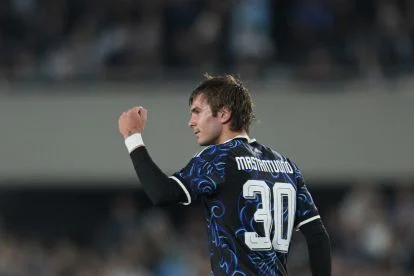
Argentina squad
Goalkeepers: Emiliano Martinez (Chelsea), Geronimo Rulli (Manchester City), Juan Musso (Atletico Madrid)
Defenders: Santiago Beltran (River Plate), Gonzalo Montiel (River Plate), Agustin Giay (Palmeiras), Aaron Anselmino (Chelsea), Mariano Troilo (Parma), Leonardo Balerdi (Roma), Lisandro Martinez (Manchester United), Facundo Medina (Bayer Leverkusen), Nicolas Tagliafico (Lyon), Roman Vega (Zenit)
Midfielders: Ezequiel Fernandez (Bayer Leverkusen), Alexis Mac Allister (Liverpool), Nico Paz (Como), Maximo Perrone (Como), Valentin Barco (Chelsea)
Forwards: Matias Soulé (Roma), Franco Mastantuono (Fiorentina), Giuliano Simeone (Atletico Madrid), Gianluca Prestianni (Benfica), Thiago Almada (River Plate), Jose Manuel Lopez (Palmeiras), Santiago Castro (Roma), Julian Alvarez (Atletico Madrid)
The list shows the depth of the group across all four lines, with club affiliations ranging from Argentina and Brazil to several major European leagues. The Serie A contingent is easy to identify: Roma’s three selections lead it, Como contributes two, and Fiorentina and Parma add one apiece. The roster doesn't indicate how those players will be deployed, but it does show that Scaloni has options drawn from several clubs and positions.
What the call-ups mean for the clubs
For the four Italian clubs, the selections carry a practical consequence beyond recognition. International commitments can compress the time players have to recover and prepare for club fixtures, while injuries and suspensions can change the workload for those who remain behind. If you're working in this space, the useful distinction is between squad presence and actual match involvement: the former is confirmed here, while the latter remains to be seen.
And yet, the club impact won't be identical for every player. Roma have the largest group and face the specific question of managing Balerdi and Soulé around the reported Como match; Como must account for two midfielders in the Argentina camp; Fiorentina and Parma each have one player selected. Those differences make the headline total less informative than the individual situations.
Scaloni’s November group is therefore a mix of opportunity and constraint. The seven Serie A selections give the league a substantial foothold in this squad, while the absences limit some of the established choices available to Argentina. The friendlies will show which alternatives get minutes. For now, the list establishes who’s in the conversation, not who’ll emerge with a larger role.