Bruno Fernandes’ retaken penalty gave Manchester United a route back into a Champions League match that had been slipping away. United were 2-0 down to Roma at Old Trafford after 18 minutes, but Fernandes converted on his second attempt and the hosts went on to win 3-2. The scoreline captures the reversal, but the penalty was the moment that made a response feel possible. At that stage, United needed more than a way back onto the scoreboard: they needed a reason for the crowd and the players to believe the match could still change.
His first effort was saved by Devis Vasquez. Bryan Cristante entered the penalty area before the rebound was cleared, prompting VAR to order a retake. Fernandes called the reprieve fortunate, then changed his approach. The sequence put the pressure on both the decision and the taker: a second chance arrived, but it also meant Fernandes had to reset after seeing his initial shot stopped. A retake can offer relief, but it doesn’t guarantee a goal.
Fernandes picked a spot and committed
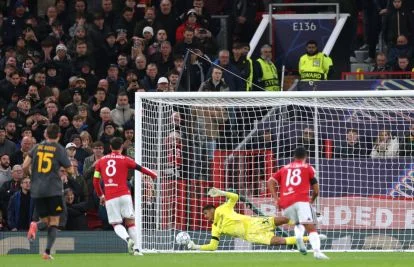
“I knew it was a big responsibility,” Fernandes told Sky Sport Italia. “We really needed a goal to get the crowd behind us at that moment.” He described penalties as stressful because the taker faces the goalkeeper alone, with no teammate able to help. That isolation is part of the job, but the setting mattered: United were chasing the match, and the penalty offered a chance to change the mood inside Old Trafford.
“I was lucky honestly that Cristante went into the box too early,” he said. On the retake, Fernandes chose a target and struck firmly instead of trying to anticipate the goalkeeper’s movement. That change made the decision simpler under pressure: commit to a chosen spot and trust the strike. The goal began United’s comeback. A moment of fortune opened the door; execution still had to do the rest.
That distinction matters. The VAR decision gave United another attempt, but Fernandes still had to convert it, and the first save had already shown how quickly a penalty can turn. Here's the thing: the goal’s value wasn’t only that it made the score closer. It gave United an immediate response to a damaging start and gave the crowd a reason to get involved again. The start of the comeback.
A win amid a difficult spell
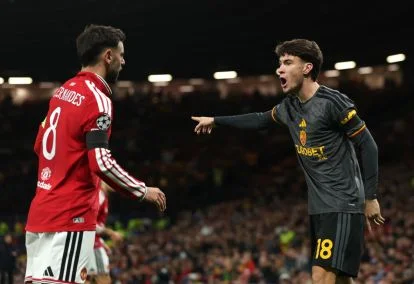
Fernandes spoke in Italian after the match, against the backdrop of reports that United staff had prevented him from addressing local media in the language following a 4-1 Champions League defeat to Como. The Portugal international had previously spent several years playing in Italy’s Serie A and Serie B. His decision to speak Italian gave the interview an added context, though the available details don’t establish why the earlier media appearance had been handled differently. That background is relevant, but the result itself remains the central point: United had come back from two goals down to win.
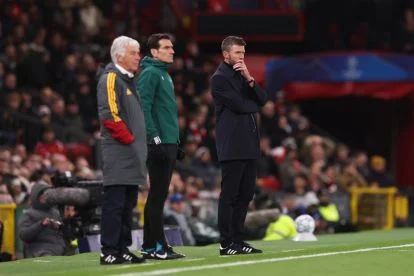
Fernandes framed the result as a needed lift for a team in a difficult spell. United had not won since September 10, and he acknowledged recurring problems with conceding early. A comeback can show resilience, but it doesn’t erase the pattern that made one necessary. The opening 18 minutes remain the clearest warning in this account: United had to recover from a position they’d allowed Roma to create.
“We aim to do one thing and we do another, we concede goals at the start of games,” he said. “It is a truly difficult moment, but we must try to get ourselves out of it.” The bluntness is useful. Fernandes didn’t present the win as proof that the problems had disappeared; he described a team still struggling to carry out its intentions and avoid early concessions. That said, winning after falling behind can give a squad a different kind of evidence: it has found a way to respond in a match where the first plan wasn’t working.
He said the squad still has the quality to improve, pointing to the players’ performances last season and additions made over the summer. For United, the comeback offers a result to build on; Fernandes said the next step is to keep working and turn that confidence into better performances. If you're following United, the useful test will be whether the team can pair that response with a steadier opening. This is more significant than it looks as a morale boost, but one win can’t answer whether the early goals are a temporary problem or a recurring weakness.
What the comeback can—and can’t—show
The win gives United a concrete positive after a difficult spell: they recovered from a two-goal deficit, and Fernandes described the squad as capable of improving. Yet the match also reinforces the tension in his comments. United’s determination mattered after the penalty, while their early defending had already left them with a steep climb. Confidence from a comeback is valuable; it’s more convincing when the team no longer needs one to rescue the result.
For Fernandes, the penalty was both an individual test and a turning point for the team. He acknowledged the luck behind the retake, then explained the choice that helped him score it. That mix of fortune and composure is a fair account of the moment. And yet, the longer measure for United will be what follows: whether they can carry the belief from this win into better performances and stop conceding at the start of games.