Rocchi leaves refereeing association for television role
Gianluca Rocchi has chosen regular television analysis over his place in Italy’s refereeing association. The former Serie A and Serie B referee designator resigned from the Italian Referees’ Association (AIA) on Saturday, according to GianlucaDiMarzio.com, citing Calvar.it. The decision brings a professional tension into the open: Rocchi’s new work asks him to discuss refereeing decisions publicly, while his association’s rules limit what members can say about officials who are still active.
The immediate issue is his new role as a regular pundit on DAZN. AIA rules restrict members’ public comments about active officials, while Rocchi’s television work involves analysing refereeing decisions. Until now, he’d required individual permission from the association for each appearance. He made his DAZN debut on the network’s Sunday night show earlier this month and has opted to continue.
That arrangement made each appearance dependent on a separate approval. Resigning removes the need to seek permission as an AIA member, though the available reports don’t set out what other conditions, if any, apply to his television work. The choice is practical as well as symbolic: a recurring pundit role needs a predictable basis, while case-by-case permission leaves the association with a say over each broadcast.
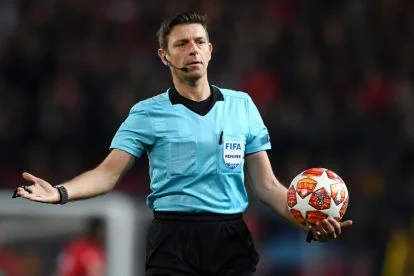
Television analysis gives a former referee a public platform to explain how decisions are assessed and why disagreements arise. It also places those explanations in the middle of a live debate: viewers may be looking for a clear verdict, while officiating can involve judgment and interpretation. That gap between a concise broadcast discussion and the complexity of a decision is part of the job.
Here’s the thing: regular access to an experienced referee can help audiences understand the work behind a call, but it can also make the analyst’s independence a subject of scrutiny. Rocchi’s resignation clarifies his relationship with the AIA; it doesn’t, by itself, establish how viewers will judge his commentary. That will depend on what he says on air and how clearly he distinguishes explanation from advocacy.
Resignation follows closure of investigations
Rocchi’s departure comes weeks after authorities closed investigations into allegations tied to his refereeing work. Milan prosecutors had investigated alleged complicity in sporting fraud over claims of interference in the VAR room at Lissone. Rocchi suspended himself from his role while the inquiry was underway.
The criminal investigation was dropped. On October 1, the FIGC federal prosecutor also closed the sporting case, with the support of CONI’s sports prosecutor general. Italian reports said investigators found no evidence of direct contact, including by phone, between Rocchi and club officials. His next chapter will put his refereeing analysis in front of DAZN viewers on a regular basis.
Those outcomes matter to the context, but they shouldn’t be stretched beyond what’s reported. The investigations concerned allegations; their closure means the cases were dropped, and reports said investigators found no evidence of direct contact with club officials. That account doesn’t supply a full record of every investigative step or explain the reasoning in detail. Keeping that distinction clear is especially important when the subject is officiating, where public confidence can turn on both decisions and the process used to examine them.
Rocchi’s suspension during the inquiry also marks a separate stage from his current choice. He stepped aside while the investigation was underway; the cases have since closed, and he’s now leaving the association as he takes up regular television work. The reported sequence is clear, even if it doesn’t answer every question about how his new role will be received.
What the move means for football coverage
This is more significant than it looks. Refereeing bodies need room to protect active officials from public pressure, while broadcasters have an obvious interest in offering viewers informed analysis of contentious calls. Rocchi’s resignation shows how those aims can come into conflict when a former senior figure wants to comment regularly on the same system he once served. It’s a boundary question with consequences for the credibility of both sides.
For the AIA, rules limiting members’ public comments help define who can speak about active officials and under what terms. For a broadcaster, a former referee can bring technical understanding that a general sports presenter may not have. The friction isn’t unusual in this category of work: expertise can make commentary more useful, while prior institutional ties can prompt viewers to ask whose interests an explanation serves.
(And this is the part most people overlook.) A pundit’s value doesn’t come only from delivering a verdict. It also comes from showing what information is available, where judgment enters, and what can’t be established from a television replay. If you’re working in this space, that distinction is central to earning trust: certainty may make for a sharper segment, but careful explanation gives viewers more to assess.
And yet. The source doesn’t say what Rocchi’s regular appearances will cover beyond refereeing analysis, or whether his commentary will focus on particular competitions or decisions. Nor does it report a change to AIA policy. The immediate fact is narrower: he’s resigned, and he’s chosen to continue working with DAZN rather than seek separate permission for each appearance.
That leaves the next phase to unfold in public. Rocchi’s experience may give viewers a useful account of how refereeing decisions are considered, but his explanations will sit alongside the unresolved sensitivities that surround officiating and VAR. A clear separation between analysis and institutional authority will matter. The commentary begins with a change in status; its credibility will be built one broadcast at a time.