A tribute damaged again
The second attack on Franco Baresi’s mural outside Casa Milan, barely two weeks after its restoration, has renewed anger among Milan supporters. Black paint covered the former captain’s armband and the club crest on his shorts, according to MilanNews24. Tgcom24 reports that paint also obscured the European Cup shown in the mural.
The marks target symbols that give the image much of its meaning: Baresi’s role as captain, his connection to Milan, and the club’s European history. The reports establish what was covered, but they don’t identify who was responsible or explain a motive. That uncertainty matters; the damage is clear, while any claim about intent would go beyond the available facts.
For supporters, the timing sharpens the frustration. The artwork had only recently been restored after an earlier attack, so the new damage turns what might have been a one-off incident into a repeated affront to a public tribute.
The artist rebuilt the work at a larger scale
Street artist Luca Rosada, known as Lucas Street Art, created the work in Piazza Gino Valle as a tribute to the former Milan captain. Baresi died at the end of July, aged 66.
The mural gives a public form to remembrance: it places Baresi’s image in a location associated with the club and makes the tribute accessible beyond a stadium or museum. Such works can become part of a neighborhood’s visual life, which also leaves them exposed to damage in a way that more controlled displays aren’t.
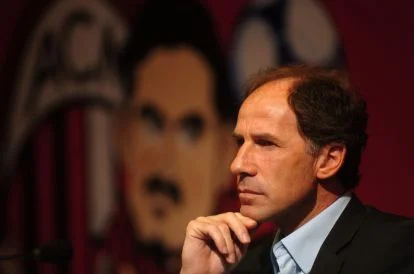
The photograph shows Baresi at a press conference in Beijing in 2006, a reminder that his public profile extended beyond match days and Milan’s home ground. The mural’s setting is more local, but its subject carries a history recognized by supporters well beyond the square.
A larger restoration followed the first attack
The mural was first defaced on September 27, when red paint was sprayed over Baresi’s face. Milan city councillor Alessandro Giungi described the act as “a vile and wretched gesture” as the city worked to identify those responsible.
Rosada later recreated the artwork at a larger scale, depicting Baresi smiling. The restored mural was unveiled on October 10. That sequence suggests a deliberate effort to answer the first defacement with a more prominent version of the tribute; the second attack now raises a practical question about how the work can be maintained in a public space.
Baresi spent his entire 20-year playing career with Milan, winning six Scudetti and three European Cups. The club retired his No. 6 shirt when he stopped playing in 1997, and he was part of Italy’s 1982 World Cup-winning team. His record makes the repeated damage to the tribute especially resonant for supporters.
Those achievements explain why the mural’s details carry weight. A captain’s armband and a European Cup aren’t decorative extras in this context; they connect the portrait to the milestones supporters associate with Baresi’s career. The numbers are substantial, but the response to the vandalism is also about recognition and belonging.
What the repeat attack means for the tribute
This is more significant than it looks. A single act of vandalism can be repaired; repeated damage, especially so soon after a restoration, tests whether a public memorial can remain a shared point of pride. (And this is the part most people overlook.) The artist’s work and the community’s response can restore the image, but neither automatically prevents another attack.
If you’re working in this space—whether as an artist, supporter, or city official—the immediate challenge is balancing open access with the care needed to preserve a public artwork. There’s no confirmed account here of who carried out either attack, and no stated plan for additional protection. What happens next will shape whether the mural remains a living tribute or becomes an ongoing site of repair.
For now, the clearest story is the collision between Baresi’s enduring place in Milan’s history and the vulnerability of a tribute placed in public view. Repeated damage. A larger restoration. And a question supporters are left to confront: how should the city and club respond when remembrance itself becomes a target?