Serie A’s Ballon d’Or record spans 18 awards, shared by Italian icons and foreign stars who defined some of the league’s strongest sides. Juventus and Milan have eight wins apiece, with Inter accounting for two. The split says something about the clubs’ place in European football: the award count reflects not only individual brilliance, but also the teams and international moments that gave those performances a wider stage. Yet no player based in Italy has claimed the prize since Kaká in 2007—a long gap for a league that once supplied winners in quick succession. That absence makes the record a history lesson, but also a measure of how far the award’s center of gravity has shifted away from Serie A.
Italian winners across five decades
Omar Sívori, born in Argentina but an Italy international, became the first Serie A player to win the award in 1961 with Juventus. His story complicates any simple division between “Italian” and foreign winners: football identity can reflect birthplace, national team and club career at once. Milan’s first winner was Gianni Rivera in 1969, after he helped the club secure European Cup glory. In both cases, the award connected a player’s standing to the reputation of his club and the success of a team on Europe’s biggest stage.
Juventus then produced three Italian winners across the next quarter-century. Paolo Rossi took the 1982 award after leading Italy to the World Cup in Spain and finishing as the tournament’s top scorer. Roberto Baggio followed in 1993, recognized after a standout season that included Juventus winning the UEFA Cup. These awards came in very different circumstances, but each shows how club form and international performance can reinforce one another in the voting. A major tournament can sharpen the case for a player; a strong season at club level gives that case a longer frame.
Fabio Cannavaro’s 2006 win came after Italy’s World Cup triumph. The Juventus and Real Madrid defender remains both the last Italian and the last defender to receive the award. His victory also stands out in a prize often associated with goals and attacking flair: it recognized a defender at the moment his role in a successful national team was especially visible. That distinction has lasted. The award can honor different kinds of excellence, but defenders have rarely occupied its center.
Foreign stars powered the tally
Juventus’s run of four consecutive winners began with Rossi and continued through Michel Platini, who won three straight awards from 1983 to 1985. Milan’s Dutch partnership followed: Ruud Gullit won in 1987, while Marco van Basten claimed the prize in 1988, 1989 and 1992. The sequence shows how a club can become closely associated with the award when it builds a side around players operating at the highest level. It also shows how concentrated the tally is: a small number of teams account for most of Serie A’s winners.
Inter’s Lothar Matthäus earned the 1990 award after captaining West Germany to the World Cup. Milan’s George Weah became the first African winner in 1995, and Inter’s Ronaldo collected his first Ballon d’Or in 1997, aged 21 and in his first season in Italy. Those cases underline how the prize reaches beyond domestic results. National team success, a player’s profile and the sense of a breakthrough season can all shape how an individual campaign is remembered.
Zinedine Zidane won in 1998 after France’s first World Cup victory. Juventus midfielder Pavel Nedvěd was recognized in 2003 after helping the club reach the Champions League final; Milan forward Andriy Shevchenko followed in 2004, having topped Serie A’s scoring charts as Milan won the Scudetto. The contrast is useful: a Ballon d’Or case can be built around a landmark international tournament, a deep run in Europe, or decisive production in the domestic league. There isn’t one template, even when the winners share the same competition.
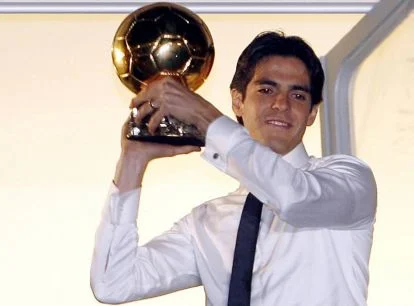
Kaká’s 2007 award came after he inspired Milan to Champions League success. His win closed a remarkable stretch for Serie A; the league’s next winner has yet to emerge. That’s a striking break in continuity for a competition with 18 awards and several clubs capable of producing multiple winners. The numbers here are underwhelming as a current measure of influence: the historical total is strong, but it can’t by itself show that the league remains a regular source of the game’s most celebrated individual performances.
What the long gap says about Serie A
This is more significant than it looks. A league’s Ballon d’Or total is a record of past achievement, not a live ranking of its current strength, and the award is shaped by individual seasons as well as team success. Still, a gap that has lasted since 2007 changes the way the record reads: Serie A has a deep legacy, while its most recent chapter has no winner to add to it. The old sequence remains impressive. The silence after Kaká is part of the story now, too.
If you’re working in this space, the useful question isn’t only which club has the most wins; it’s what conditions make an award-winning season visible. The history here repeatedly links individual recognition to strong club campaigns, European competition and major international tournaments. Similar awards typically reward both performance and the narrative around it, so a player can be exceptional without the season becoming a defining one in public memory. And this is the part most people overlook: a long absence doesn’t erase a league’s history, but it does make each new season an opportunity to change how that history is understood. For now, a record built by Italian and foreign stars alike remains a record of what Serie A has produced, not a guarantee of what comes next.
Serie A history offers a clear measure of that record, while Kaká’s Milan highlights recall its last Ballon d’Or triumph. Together, those references point to the two parts of the story: a competition with a remarkable roll call and one recent winner whose season remains its latest benchmark. The next name hasn’t arrived yet.