Barcelona’s attack still needs a defensive foundation
Barcelona’s attacking threat still hasn’t solved the problem that matters most in big matches: keeping dangerous forwards in check. Defeats to Paris Saint-Germain and Real Madrid have exposed familiar gaps at the back, and the squad’s centre-back options look short of the standard Hansi Flick’s side needs. The pattern is concerning because it puts a limit on what the team’s attacking ambition can achieve: Barcelona may create chances, but opponents can still find ways to turn its forward momentum into defensive exposure.
The loss in Paris followed a match in which Barcelona had controlled stretches before PSG took over. Against Real Madrid, the warning came again. Barcelona can play with ambition and create chances, but that progress hasn’t yet made them reliable against Europe’s strongest teams. Possession and pressure matter only if the team can manage the spaces those tactics leave open; in high-level matches, a few clean breaks can outweigh long spells of control.
Space behind the defence remains a target
Jose Mourinho showed how to unsettle Flick’s attacking approach: close down the wide supply, stay compact, then break quickly into the space Barcelona leave behind. That plan asks Barcelona to solve two problems at once. The team must find ways through a crowded defence, then recover quickly when an attack breaks down and opponents run into open ground.
Balls over the top remain a particular danger, especially when the opposing striker has pace. Kylian Mbappé had opportunities to score more than he did; Barcelona were fortunate the damage wasn’t greater. That’s a warning about the margin for error in this kind of matchup: a defender who starts a step too high or reacts a moment too late can leave the goalkeeper facing a direct threat.
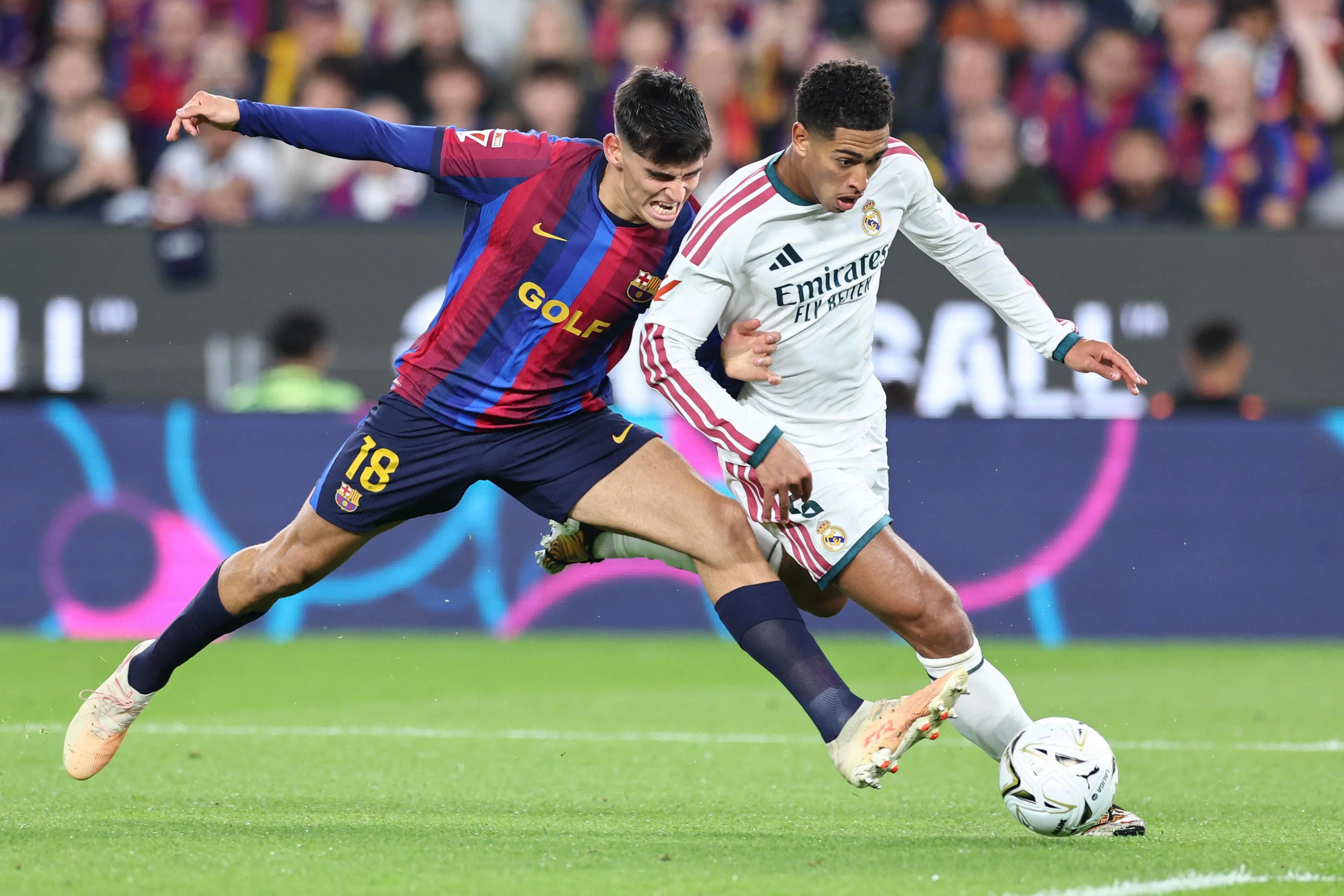
The problem isn’t simply a poor performance from one defender. Pau Cubarsí needs a dependable partner, and Barcelona’s current choices come with trade-offs. Andreas Christensen has struggled to stay fit, making it difficult to count on him as the consistent presence the partnership needs. Eric García has covered several roles, but that versatility makes it hard to establish him as a settled centre-back; his strongest position may lie elsewhere.
Those are different limitations, but they converge on the same issue: Flick needs to know what his central pairing will look like from one match to the next. Familiarity helps defenders coordinate their positioning, cover for each other and judge when to step forward. Barcelona’s options may be capable individually, yet the team hasn’t found a pairing that consistently handles the demands of elite opponents.
Jules Koundé may already be past his best in the role, while Gerard Martín hasn’t shown enough to make a convincing first-choice pairing with Cubarsí. Each option can help the squad, but together they haven’t provided the consistency Barcelona need against elite opposition. The concern is less about dismissing any one player than about whether the group, as currently assembled, has the right balance of availability, experience and defensive judgment.

January puts the centre-back question in focus
Ronald Araújo’s situation adds another possible route. He has shown strong form during his loan at Liverpool, but bringing him back early would raise questions: his performances before the loan were inconsistent, and his fit with Flick’s system remains uncertain. Good form elsewhere is relevant, but it doesn’t settle whether he can provide the specific qualities Barcelona need in this role, under this coach and in this style.
That choice would also carry a practical trade-off. An early return might add a familiar option to the defence, but Barcelona would still need to judge whether Araújo’s strengths address the vulnerabilities exposed in these matches. If you’re working in this space, the distinction matters: adding a centre-back only helps if the player can defend the space behind an aggressive line and build a dependable partnership with Cubarsí.
Barcelona’s clearest need is a defender with the qualities Íñigo Martínez brought: experience, aerial strength, physical presence and the judgment to break up attacks early. That profile can also contribute in possession and on attacking set pieces. Calling such a player “old school” misses the point; those attributes still matter when a team has to defend space under pressure. And this is the part most people overlook: a defender’s value isn’t limited to the tackles or clearances that make a highlight reel. Reading danger early can prevent the opponent from reaching the decisive moment at all.
What the next decision could mean
Barcelona are improving, but the recent defeats show that progress alone won’t close the gap. The club’s next recruitment decision should begin at centre-back, where a top-level partner for Cubarsí could give Flick’s attack a more reliable foundation. This is more significant than it looks: the right addition could help the team defend transitions with greater confidence, while a poor fit would leave the same structural question hanging over the attack.
There’s no guarantee that a signing, or a change in Araújo’s situation, would resolve every defensive problem. The midfield’s pressure, the full-backs’ positioning and the centre-backs’ decisions all shape how much space opponents can exploit. Still, the evidence in these defeats points to a clear priority. Barcelona need a pairing that can handle pace, stay composed under pressure and support the way Flick wants his side to play. A foundation. Without it, attacking progress remains vulnerable whenever the opponent finds room to run.