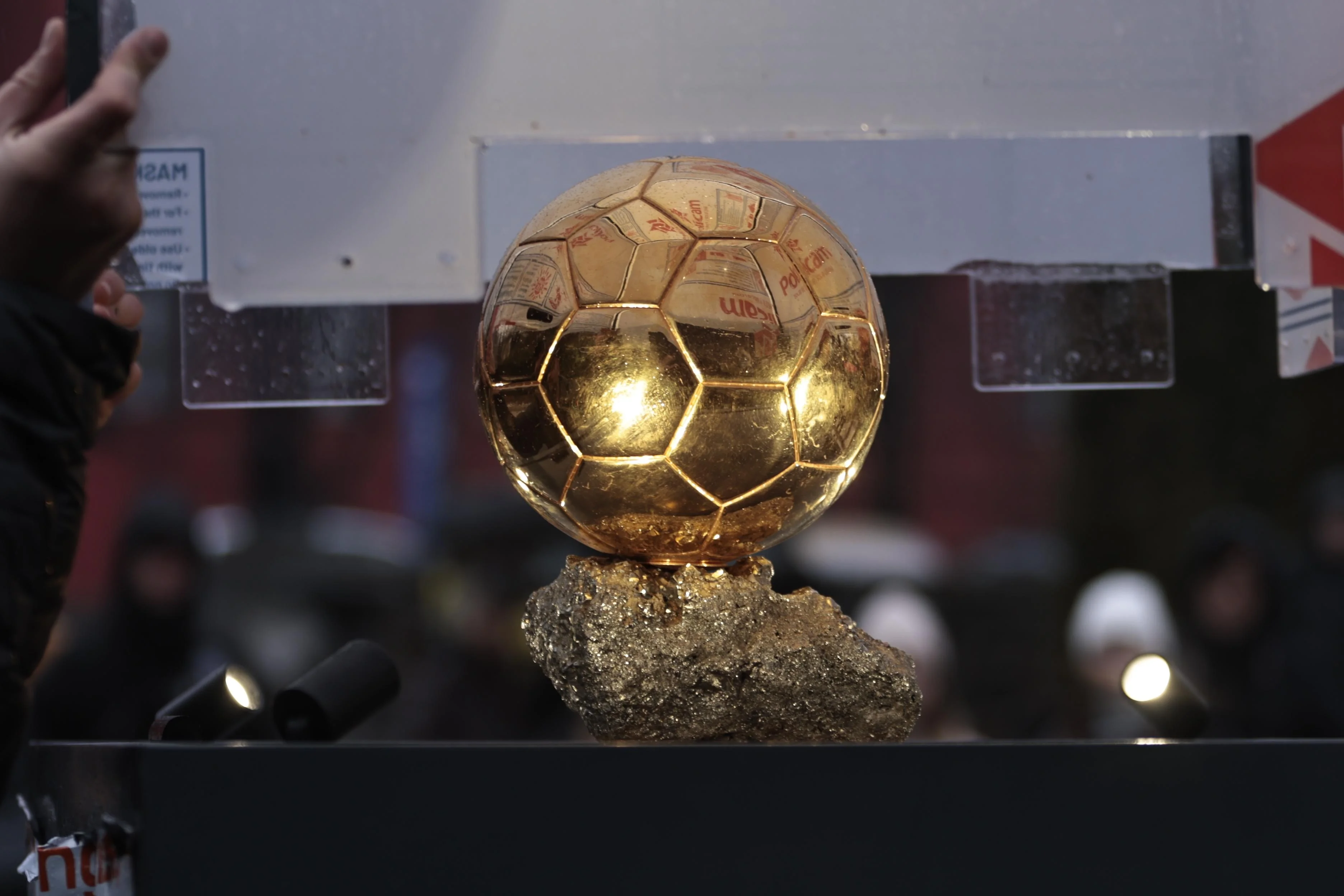
Conflicting winner announcements appear online
The Ballon d’Or website briefly identified three different winners for its 2026 award, publishing separate articles naming Lamine Yamal, Harry Kane and Kylian Mbappé. The pages were quickly removed, leaving the result unresolved hours before the London ceremony. For an award built around a single winner, three competing announcements create an unusually public question about whether the official site’s publishing process had failed.
The incident did not establish who had won, or why the articles appeared. It did, however, put the website at odds with the basic purpose of an awards announcement: giving readers a clear, authoritative result at the moment it becomes public. The removal of the pages stopped the conflicting claims from remaining live, but it couldn’t undo the uncertainty created while they were visible.
A rankings rollout disrupted
The mistake surfaced as the award’s rankings were being released on Monday. Organizers had been revealing places 30 through 11 across social media, with the top 10 still to come. Fans visiting the official site instead found articles declaring each of the three leading contenders the winner.
That sequence matters. The published rankings were intended to build toward the final announcement, letting audiences follow the field as it narrowed. A premature winner page can short-circuit that process, even when its contents are inconsistent and quickly withdrawn. In this case, readers were left to distinguish between the scheduled rankings and material that appeared to announce the outcome.
The official site also carries a different weight from an ordinary fan post. Readers reasonably expect it to reflect the organizers’ confirmed information. When its pages conflict, the simplest response is to wait for the ceremony; screenshots and reposts can keep the mistaken claims circulating after the original pages have disappeared.
As the post above reported, the organizers were investigating the publication error. Its rapid spread online turned a website mishap into an awkward prelude to the ceremony for France Football, which was due to announce the winner that evening.
Here's the thing: removing a page addresses what visitors can see on the site, but it doesn’t explain how contradictory winner articles were published in the first place. The organizers’ investigation may clarify that point, though no explanation is included in the available information. Until then, the episode is a reminder that a small publishing error can become a major story when it concerns a result audiences are waiting to hear.
A crowded final 10
Yamal, Kane and Mbappé were among the 10 players still in contention, alongside Erling Haaland, Khvicha Kvaratskhelia, Lionel Messi, Michael Olise, Rodri, Ousmane Dembélé and Fabián Ruiz. The three will have to wait for the ceremony to learn which name, if any, the official result confirms. Until then, the conflicting pages offer no reliable answer.
The broader shortlist gives the ceremony its sporting context: the mistake involved a field that still included several prominent candidates, not a final result already established in the material provided. Each player’s presence among the last 10 signals contention, but it doesn’t tell readers how the votes were distributed or which candidate was leading. Those details can’t be inferred from the three withdrawn pages.
This is more significant than it looks as a publishing failure. The Ballon d’Or’s value depends in part on the announcement being clear and trusted, and an official site is where readers look for that clarity. The error may prove brief, but its effects on the conversation can outlast the pages themselves.
What the error means for the ceremony
For anyone following the award, the practical answer is straightforward: the winner remained unconfirmed in the information available before the London ceremony. If you're working in sports media, this is the kind of moment that calls for restraint; repeated claims can give an unverified page the appearance of confirmation. A result announced at the ceremony will provide the answer the website’s conflicting articles couldn’t.
And yet, the episode also shows how the ceremony’s buildup can be disrupted by its own publishing channels. The rankings rollout had already given fans a way to track the field, while the official pages briefly offered three mutually incompatible endings. The fragment that remains: anticipation without confirmation.