Kane’s scoring season earns football’s top individual honor
Harry Kane’s first Ballon d’Or caps a season built on extraordinary scoring: the Bayern and England striker netted 61 times in 51 games in 2025-26. He becomes the first English winner since Michael Owen in 2001, ending a long gap between English players receiving the sport’s best-known individual award.
The total gives voters a clear argument for Kane’s case. Scoring at that rate across a full season is a sustained achievement, not a brief run of form, and his output came while representing both Bayern and England. The figure alone can’t describe every part of his contribution, but it places his finishing at the center of this year’s decision.
Ballon d’Or voting asks voters to compare players whose roles, teams and seasons differ. A forward’s goals are easy to count; the wider influence behind a team’s results is harder to reduce to one measure. Kane’s season, as described here, offers a relatively direct story: prolific scoring paired with a deep run at the World Cup.
A season that carried Kane to the top
Kane also helped England reach the 2026 World Cup semi-finals, where Argentina ended the Three Lions’ run. That finish gave his international season a major stage, though it stopped short of a place in the final. England’s campaign and Kane’s club scoring together formed the clearest résumé behind his win.
The final five in the Ballon d’Or vote were Kane, Kylian Mbappé, Lamine Yamal, Rodri and Lionel Messi. Their presence points to the breadth of the contest: the shortlist brought together established stars and a young forward already collecting major honors. The source doesn’t give the vote totals or margins, so it’s impossible to say how close the decision was.
That uncertainty matters. A winner is easy to name; the reasoning across a ballot is less transparent when the supporting numbers aren’t available. Kane’s 61 goals make his case legible, but the award also reflects voters’ judgments about performance across different competitions and positions.
Yamal takes the young player honor
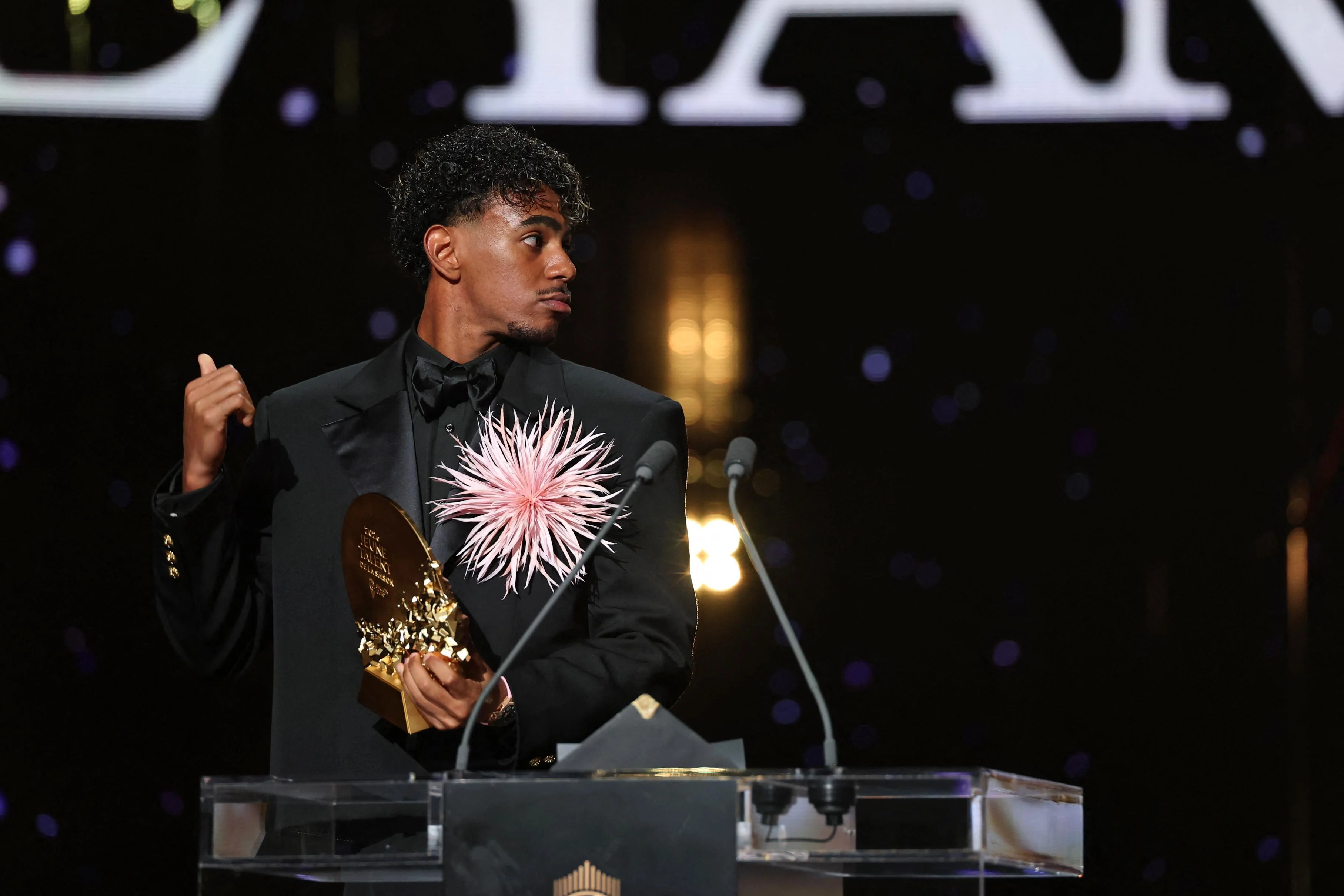
Yamal collected his third consecutive Kopa Trophy earlier in the ceremony. The Barcelona forward was also in contention for the main award after winning La Liga with the club and the World Cup with Spain. His presence among the final five puts him in direct company with players whose reputations have been built over longer stretches, even as the Kopa Trophy recognizes his standing among younger talent.
Three consecutive wins make the young-player award more than a one-night milestone. They suggest a rare level of consistency in how Yamal has been judged against his age group, while his main-award candidacy shows that his season was being weighed on a broader scale too. The distinction is useful: the Kopa Trophy marks achievement among young players, while the Ballon d’Or places candidates in a field spanning generations.
For Yamal, the main prize will have to wait. That’s a meaningful outcome, but it shouldn’t turn the night into a simple story of one player succeeding and another falling short. Kane won the leading honor; Yamal added another young-player award to a growing run of recognition.
What the result says about the season
This is more significant than it looks for English football: Kane’s victory ends a 25-year wait for an English Ballon d’Or winner, with Owen the previous one named in the source. The gap gives the result a national context, while Kane’s goal record supplies the sporting case. Neither fact erases the uncertainty that comes with comparing players across different roles, but together they explain why this particular win stands out.
Here’s the thing: awards can compress a complicated season into a single name. Kane’s scoring gives this one a strong headline, while the World Cup semi-final adds an international dimension. Yet the shortlist also included players with different achievements, and without vote details the award’s margin and internal debate remain unknown.
If you’re working in this space, the useful signal is how clearly measurable output can shape the public account of an individual season. Goals travel easily from match reports to award arguments; influence that doesn’t show up in a scoring line takes more explanation. And this is the part most people overlook: a clear narrative isn’t the same as a complete record of how voters reached their choice.
For now, Kane’s first Ballon d’Or closes the season with a straightforward distinction: 61 goals in 51 games, an English winner for the first time since 2001, and a place at the top of a field that included Mbappé, Yamal, Rodri and Messi. Yamal’s third Kopa Trophy gives the ceremony a second marker of achievement, one centered on a different stage of a player’s career. Two awards, two kinds of recognition.