World Cup performance earns Simón top goalkeeper award
Unai Simón’s role in Spain’s World Cup-winning campaign has been recognised with the Yashin Trophy, awarded to the world’s best goalkeeper at the Ballon d’Or ceremony. He succeeds last year’s winner, Italy’s Gianluigi Donnarumma. The award gives a goalkeeper a distinct place in a ceremony whose main prize has historically been difficult for players in that position to win.
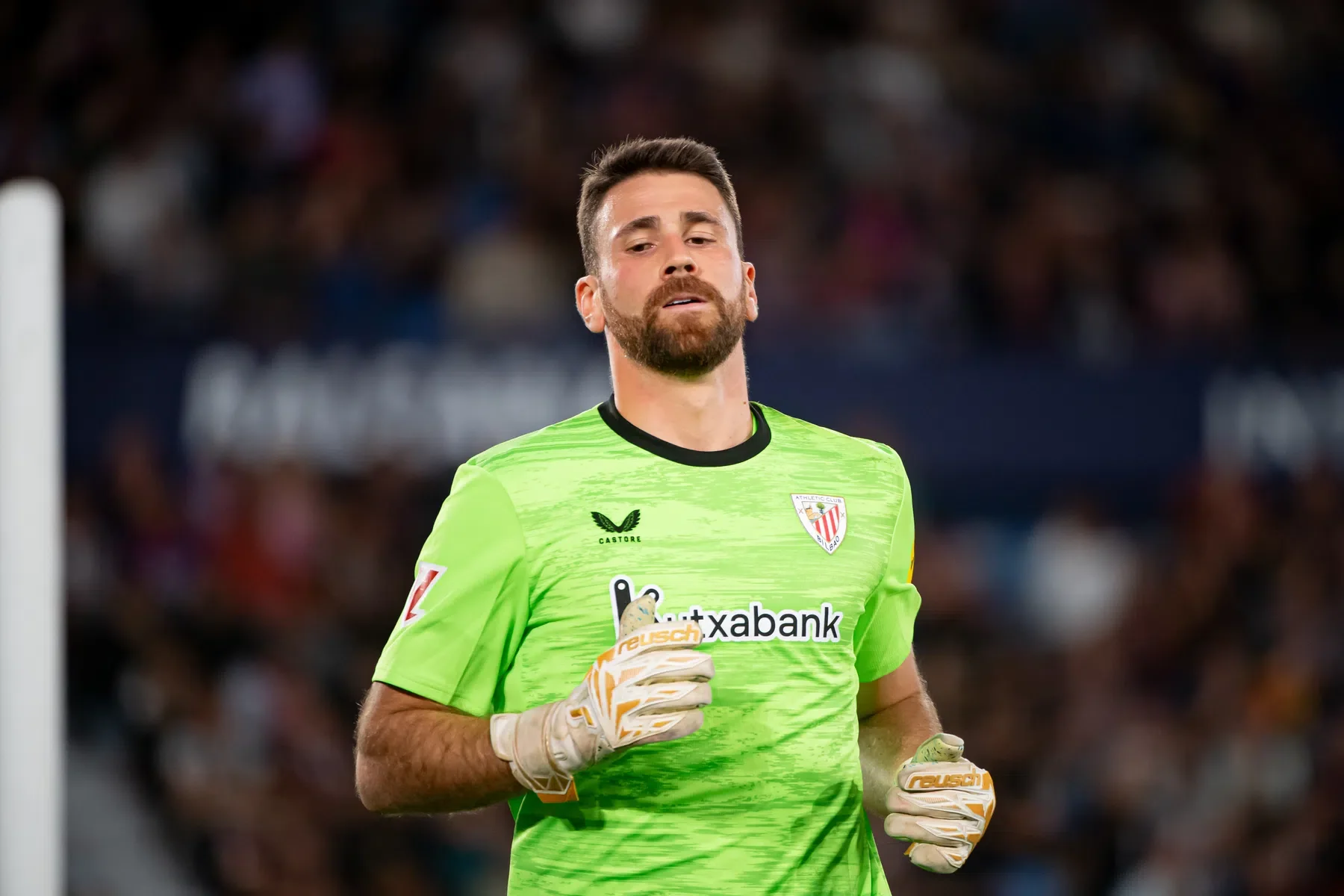
The 29-year-old has played for Athletic Bilbao since 2018 and has earned 69 caps for Spain. At the World Cup in the United States, Mexico and Canada, Spain claimed its second title after a tense final, with Simón a key figure in the team’s run. Those details place the award in both a club and national-team context: Simón’s recognition follows an international campaign that ended with the sport’s most prominent team prize.
A goalkeeper’s contribution can be hard to reduce to a single match or moment. Their work is often judged across a tournament, through the steadiness they bring to a team and their part in keeping a campaign alive when pressure rises. The source identifies Simón as a key figure, though it doesn’t provide match-by-match evidence or explain which performances most shaped the voters’ decision. That leaves the award as a clear result, but not a detailed account of how he earned it.
A dedicated award, separate from the main Ballon d’Or
Organisers introduced a goalkeeper-specific award in 2018. Since Lev Yashin won the Ballon d’Or in 1963, no goalkeeper had claimed the main prize. Manuel Neuer, third in 2014, was the last goalkeeper to reach its podium; this year, no keeper was nominated for the overall award. No Dutch goalkeeper has ever finished on the Yashin Trophy podium.
The separate trophy gives voters a way to recognise goalkeeping without requiring a goalkeeper to compete directly for the main Ballon d’Or. That distinction matters because the roles are judged differently: outfield players tend to accumulate visible contributions across a match, while a keeper’s best work can consist of preventing a chance from becoming a goal. The existence of a dedicated award acknowledges that difference, though it also leaves the main prize’s history as a measure of how rarely goalkeepers have reached its highest ranks.
Neuer’s third-place finish in 2014 shows that a goalkeeper can approach the main award’s podium, but the record cited here points to an enduring gap. This is more significant than it looks: a specialist award can raise a player’s profile while also underscoring that the broader honours system still treats the position as a separate category. And yet, a trophy of its own gives voters a clearer way to compare keepers with one another.
The absence of a goalkeeper among this year’s overall nominees makes the separation especially visible. It doesn’t tell us why voters made that choice, and the available details don’t establish whether any keeper came close to nomination. What it does show is that Simón’s recognition comes through the dedicated award rather than the ceremony’s main competition.
The rankings put Simón among an international field
Barcelona’s Cata Coll won the women’s goalkeeper award. The men’s top ten were:
The list places Simón ahead of keepers from several clubs and countries, with David Raya second and Thibaut Courtois third. It also includes established names such as Emiliano Martínez, Yassine Bounou and Édouard Mendy alongside Matvey Safonov, Vozinha, Joan García and Gregor Kobel. The rankings offer a snapshot of the field recognised by voters, but the list alone doesn’t explain the criteria or the margin between places.
| Rank and goalkeeper | Club |
|---|---|
| 1. Unai Simón | Athletic Bilbao |
| 2. David Raya | Arsenal |
| 3. Thibaut Courtois | Real Madrid |
| 4. Matvey Safonov | Paris Saint-Germain |
| 5. Emiliano Martínez | Chelsea |
| 6. Vozinha | Colo-Colo |
| 7. Joan García | Barcelona |
| 8. Yassine Bounou | Al-Hilal |
| 9. Édouard Mendy | Al-Ahli |
| 10. Gregor Kobel | Borussia Dortmund |
That spread of clubs gives the ranking a wider frame than a simple contest among the biggest teams. Still, the table identifies each goalkeeper’s club without giving performance statistics, voting totals or a fuller explanation of the selection. Readers can see who finished where; they can’t use these details alone to measure how close the contest was.
What the award means for Simón and the position
For Simón, the Yashin Trophy adds an individual honour to a World Cup campaign that ended with Spain lifting the title. He’s also an established part of the national team, with 69 caps, and has remained at Athletic Bilbao since 2018. The combination gives the award a clear narrative: sustained club service alongside a high-profile international achievement.
If you’re working in this space, the useful question is how the award’s standing develops over time. Its rankings can make goalkeeping performances more visible, but one year’s result can’t establish how much the trophy changes wider perceptions of the position. The source gives no voting breakdown or account of the judging process, so claims about what persuaded voters would go beyond the facts available here.
(And this is the part most people overlook.) A dedicated award can recognise excellence while leaving the main hierarchy intact.
Simón’s win is a substantial personal distinction, and Spain’s title gives it a strong team context. The rankings also show a competitive group of keepers receiving recognition. Whether that recognition translates into more goalkeepers reaching the main Ballon d’Or podium remains an open question.