Roma will be without captain Lorenzo Pellegrini for at least six to eight weeks after tests confirmed a serious injury to his right thigh. That estimate makes a return before the international break in November unlikely, leaving Gian Piero Gasperini with a significant absence to manage during a busy stretch. The diagnosis also changes the picture from the initial hope that Pellegrini had escaped major damage. For Roma, the immediate task is to adjust without one of the squad’s senior figures while avoiding pressure to rush his recovery.
Pellegrini pulled up during Tuesday’s Champions League win over Slovan Bratislava. Roma scored through Mario Hermoso, Nahuel Molina, Niccolò Pisilli and Donyell Malen, but the result came with a cost: the captain’s injury now adds to a growing list of concerns. A strong team performance can soften the immediate impact of losing a player, but it doesn’t remove the selection problem that follows. The test results, rather than the early optimism, now set the expectation for his return.
Roma face an extended absence
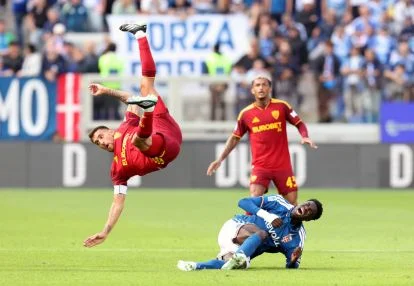
Sky Sport Italia reports that Pellegrini has a high grade lesion at the distal musculotendinous junction of the semitendinosus muscle in his right thigh. The report describes the location and severity of the injury, while the expected recovery period points to an absence of at least six to eight weeks. That places the November international break beyond the likely window for his return, though the available information doesn’t provide a precise date for his first match back.
For a player in Pellegrini’s position, the length of an absence matters as much as the diagnosis. A captain’s contribution can include leadership and familiarity with the team’s patterns, alongside his work on the pitch. Roma will need to cover those responsibilities through the players available to Gasperini. There’s no indication here of who will take over the captaincy or how the manager will reshape the midfield, so those decisions remain open.

Gasperini is also managing injuries to Paulo Dybala, Manu Koné and Mile Svilar. Bryan Cristante has returned to the squad after more than a month out, offering Roma one boost as they contend with the growing absences. His return gives the group another available option, but it doesn’t erase the strain created by several players being unavailable at once. The squad’s capacity to absorb those losses will be tested across the coming weeks.
The wider selection problem
One injury can be managed through a change in personnel or role. Several injuries across different positions make the task less straightforward, because each absence narrows the choices available for the next match. Roma’s situation includes a midfielder in Pellegrini, along with Dybala, Koné and goalkeeper Svilar; the source doesn’t specify their expected return dates or the precise effect on selection. What’s clear is that Gasperini has fewer players to draw on while he waits for them to recover.
That makes Cristante’s return useful, but the word “boost” needs to be kept in proportion. A player back in the squad can widen the manager’s options; it doesn’t establish that he’s ready to replace every role Roma has lost. If you’re following the team, the practical question is how the available players will share the work while the injured group is unavailable. The answer will depend on choices the source hasn’t yet reported.
Here’s the thing: Pellegrini’s absence is more significant than the six to eight week estimate alone suggests. It removes the captain during a period when other injuries are already limiting Gasperini’s choices. That’s a test of squad depth and coordination. And yet Roma’s four goals against Slovan Bratislava show that the team found a way to produce in that match, even as the injury changed the outlook afterward.
What the timetable means for Roma
The expected return window is a guide, not a guarantee of a particular match date. Recovery from a serious thigh injury can’t be reduced to the calendar alone, and the report gives no further medical detail about Pellegrini’s rehabilitation. Roma’s immediate planning therefore has to account for his absence without treating a November return as settled. Patience will matter; a premature comeback would solve a short term selection problem only if the player is ready to perform.
(And this is the part most people overlook.) An injury report doesn’t explain how a team will respond. That depends on the options available, the roles players can take on and how the manager balances the squad over successive matches. For now, the reported facts are narrower: Pellegrini is expected to miss at least six to eight weeks, the November international break is an unlikely return point, and Roma have other injuries to manage alongside his.
For Gasperini, the near term challenge is to keep the side functioning while those absences overlap. For Pellegrini, the priority is completing the recovery before returning to action. The next updates will matter because the current estimate leaves room for change, but the initial hope of a minor problem has already been overturned. A difficult stretch for Roma, with the details of how it unfolds still to come.