A late decision leaves Juventus with questions
Juventus’ 2-2 draw with Rennes left Luciano Spalletti questioning the offside decision that erased Jhon Lucumí’s late goal—and asking Nick Woltemade and Randal Kolo Muani to raise their level. His assessment was mixed: he welcomed the team’s response after a heavy defeat, but said Juventus still needed to show more attacking ambition. The result offered a point and a reason for encouragement, yet it also left the coach weighing what the team had done well against what it hadn’t.
Lucumí scored in the 88th minute after Teun Koopmeiners flicked on a free kick. VAR ruled the defender offside at the moment Koopmeiners made contact with the ball. “I didn’t understand it, and I’m going to look into it,” Spalletti said after Thursday’s Europa League match in Turin, in comments reported by TuttoMercatoWeb. The timing matters: a goal that late could have changed the result, so the ruling became an immediate focus for a coach trying to assess a match that had already swung between Juventus’ recovery and Rennes’ resistance.
Spalletti said he was surprised and disappointed when he watched the decision in the dressing room. He argued that a Rennes player could have cleared the ball and that Lucumí hadn’t impeded him, making the defender’s involvement central to his objection. At the same time, he praised the referee’s overall performance, while saying the call left him with doubts about how the rule had been applied. That’s a narrower criticism than a general attack on the officials, but the disagreement goes to a familiar point in offside decisions: whether a player’s position affected an opponent’s ability to play the ball.
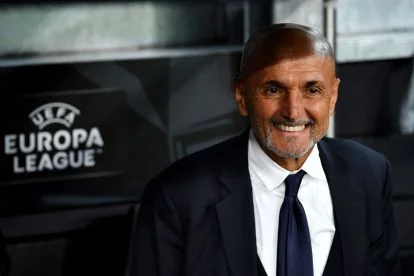
Spalletti sees room for a stronger partnership
Woltemade and Kolo Muani started together for the first time in a competitive match. Woltemade assisted Zeki Çelik’s opener and converted the penalty that brought Juventus level, giving him a direct hand in two of the team’s goals. Kolo Muani found it harder to influence the game and came off with 10 minutes remaining. The contrast gives Spalletti a practical question to solve: how to make the pair work together while getting more consistent involvement from both.
Spalletti said both performed well, but he expects more because their individual ability exceeds what they showed. That’s a demanding standard, and the coach’s praise came with a clear qualification: a promising first start together doesn’t establish that the partnership is already working at its full potential. He also sees their possibilities as extending beyond a simple pairing. “They can coexist, and when they work together, they can become three, not two.”
The remark suggests Spalletti wants their connection to create opportunities for teammates as well as for each other. Forwards who combine effectively can draw defenders toward them, open space for runners and give an attack more than one route to goal. But that outcome depends on timing and movement, not just the players’ reputations or individual skill. If you’re watching Juventus’ next performances, the useful question will be whether their link-up gives the team more options in open play.
The numbers here are underwhelming as a verdict on the partnership: one start together. Still, the match supplied a first look at what the two might offer, with Woltemade’s contributions providing the clearest evidence and Kolo Muani’s quieter display leaving more to assess. A single game can’t settle the question. Spalletti’s challenge is to turn the idea of coexistence into a repeatable attacking pattern.
A response to defeat, with limits
The draw followed Juventus’ 3-0 loss to Lazio on Sunday. Spalletti praised the players’ response, saying they accepted a difficult situation, pushed forward and earned a point. He added that Juventus hadn’t made glaring mistakes on either of Rennes’ goals. That account frames the performance as a recovery in effort and resolve, though it doesn’t answer the broader question of whether the team controlled enough of the match.
A team coming off a heavy defeat may need to show composure before it can make a more ambitious display feel credible. Juventus did find a way back into the game, and the late disallowed goal gave the team another reason to press its case until the end. And yet, recovering from a setback is different from imposing a style. Spalletti’s comments suggest he’s measuring the team against both standards.
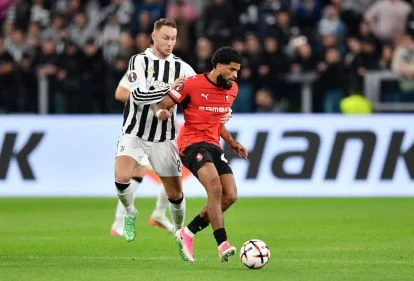
What Spalletti wants Juventus to change
He credited Rennes as a quick, technical team with a strong academy, then turned to Juventus’ approach. Spalletti wants his players to stop settling into a deep defensive shape and take more initiative: gaining ground, choosing when to press and acting like a team intent on controlling the match. That’s a more demanding instruction than simply asking the side to attack more. It calls for decisions about when to move forward and how to do so without losing the structure that protects the team.
(And this is the part most people overlook.)
Those tactical demands connect directly to the questions around Woltemade and Kolo Muani. A team that presses selectively and advances with purpose needs its attackers to help set the tempo, connect moves and make the most of the space created. Spalletti’s expectation that the forwards can become “three, not two” fits that broader aim: he wants a partnership that adds options to the whole attack. Whether Juventus can build that connection while changing their defensive habits remains to be seen.
This is more significant than it looks. The disallowed goal is an immediate, concrete grievance, but Spalletti’s comments point to a longer test: whether Juventus can respond to disappointment with control, not just effort. The draw showed resilience after the Lazio loss, while the coach’s criticism makes clear that he doesn’t regard resilience as enough. The next step, in his view, is a team that takes more responsibility for shaping the match. That shift, as much as the disallowed goal, will shape what he expects from Juventus next.