Mike Maignan’s dismissal against Bournemouth guarantees AC Milan will lose their first-choice goalkeeper for at least one Europa League match. A second European absence is possible if UEFA classifies his foul as violent conduct, a distinction that could affect the length of the suspension. The ban won’t keep him out of domestic competition, so he remains available for Serie A fixtures, including Milan’s derby with Inter.
Red card leaves UEFA to decide the length of the ban
Maignan was sent off in the 27th minute after pushing his hand into Tyler Adams’ face during a Bournemouth corner. The incident happened away from the ball, and the referee showed a straight red card after a VAR review. Marcus Tavernier converted the resulting penalty to put Bournemouth 2-0 ahead, turning a disciplinary decision into an immediate cost on the scoreboard as well as a likely absence in Europe.
The next question is how UEFA classifies the offence. The available reports establish that Maignan will miss Milan’s next European fixture, while a finding of violent conduct could add another match to the suspension. That distinction matters because a one-match ban would be limited to the immediate fixture; a longer one would affect Milan’s planning for a later European trip, too. The final length hasn’t been established in the supplied information.
MilanNews24 reports that Maignan will definitely miss Milan’s next European fixture. The report also identifies violent conduct as the possibility that could extend his suspension. The dismissal came during the Bournemouth match, where Milan brought on young goalkeeper Lorenzo Torriani, taking Omari Hutchinson off. That substitution addressed the immediate need to put a goalkeeper in the game; it doesn’t settle who’ll start in Maignan’s absence.
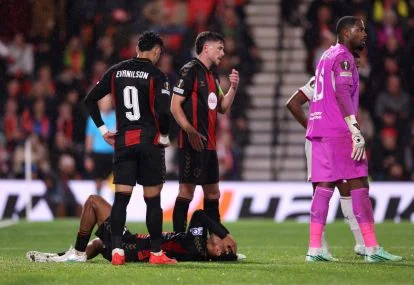
A dismissal for a goalkeeper creates a practical problem that extends beyond the missing player’s name on the team sheet. Milan had to make a substitution during the Bournemouth match to put Torriani in goal, and the same basic choice will confront the club when Maignan is unavailable: select another goalkeeper and adjust the matchday group accordingly. The source doesn’t identify who’ll take his place in the next European fixture. That decision remains open.
Domestic fixtures unaffected
UEFA suspensions apply to UEFA competitions, leaving Maignan eligible for Milan’s Serie A games. He can play against Udinese on Sunday and in the derby against Inter on 31 October. That separation gives Milan access to its goalkeeper domestically even while it must plan for his absence in Europe. It also means the card won’t, on the information available, rule him out of the Inter match.
For Milan, that’s a meaningful distinction in a busy run of fixtures. The club won’t have to treat the red card as a suspension from every competition, but it still has to manage two different availability questions: who plays in the next European match, and whether Maignan can return for the European fixture after that. The domestic schedule doesn’t answer either one. UEFA’s decision on the offence’s classification will determine the European timeline.
Maignan is set to miss Ferencváros’ visit to San Siro on 5 November. If UEFA adds a further match to his ban, Milan could also be without him away to Olympiacos on 26 November. Those are the two relevant European dates in the current account of the suspension: the first absence is definite, while the second depends on the disciplinary outcome. Treating both as confirmed would overstate what’s known.
Why the second match matters
This is more significant than it looks. A one-game European suspension is a defined setback; an additional match would extend the effect into another fixture and require Milan to cover for Maignan away from home as well. That doesn’t tell us how the replacement would perform, or what result Milan would get. It does make the UEFA classification a sporting issue for the club, not just a procedural detail.
For readers tracking the team, the useful distinction is straightforward: Maignan’s domestic availability and European availability are separate. If you’re following Milan’s fixture planning, the Inter derby isn’t affected by the UEFA ban described here, while the Ferencváros match is. Olympiacos becomes relevant only if UEFA adds a second match. And this is the part most people overlook: the red card’s immediate consequence was a penalty and a forced substitution, but its longer-term cost depends on a decision that hasn’t yet been specified.
That said, the known facts point to a limited but consequential disruption. Milan can use Maignan in Serie A, including against Inter, but must prepare for at least one Europa League match without him. The possible second absence keeps the matter open. For now, the club’s European plans hinge on whether UEFA treats the foul as violent conduct. A suspension with a clear first step, and an uncertain second.