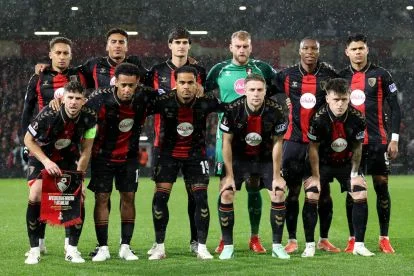
Bournemouth’s 3-0 win over Milan offered Michele Di Gregorio a close-up of what he sees as the Premier League’s defining contrast with Italian football: teams stick to their attacking ideas, whatever the opponent. The Juventus loanee says that commitment shaped the Cherries’ approach even against a European heavyweight. The result made the contrast easy to describe, though the match itself came with a major complication: Milan played most of it with ten men.
Di Gregorio made his second Bournemouth start since arriving on loan with an option to buy. Milan goalkeeper Mike Maignan was sent off after 28 minutes; Justin Kluivert and Marcus Tavernier converted penalties, and Amine Adli added a late free kick. Milan managed no shots on target, leaving Di Gregorio with little to do in the rain. A quiet night for a goalkeeper can still tell a story about the team in front of him, but the red card is part of that story too.
A clean sheet built by the team

“We were at home this evening, we knew it was an important match against a top level team, we all know Milan, but our mentality does not change,” Di Gregorio told Sky Sport Italia. He said Bournemouth stays aggressive and plays its own way regardless of the opponent or match events. That is a claim about identity as much as tactics: the team wants its habits to hold when the occasion grows more difficult.
The dismissal changed the conditions, but Di Gregorio’s description suggests Bournemouth had already decided how it wanted to play. Sticking with an attacking plan can give a side consistency; it can also ask players to keep taking risks when the match invites caution. Against Milan, Bournemouth’s approach produced three goals and a clean sheet, although the numerical advantage makes the performance harder to read as a simple test of how the teams match up at full strength.
That approach meant a quiet evening for the goalkeeper, who joked that he felt cold standing in goal. He credited the shutout to his teammates: “when a goalkeeper keeps a clean sheet, it is the work of the collective, so I have to thank my teammates for that.” It’s a sensible way to describe a game in which Milan didn’t put a shot on target. The goalkeeper’s contribution was limited; the team’s work without the ball was central.
This is more significant than it looks. A clean sheet is often treated as an individual achievement for the goalkeeper, yet Di Gregorio’s account points toward the defensive work that can keep chances from reaching him at all. And this is the part most people overlook: a keeper can be tested by a match even when he barely touches the ball, because concentration has to survive long stretches of inactivity.
Intensity and a different football culture
Di Gregorio sees matches in England as more open because teams pursue their own attacking plans rather than spending as much time studying opponents. “Every game is played with our own ideas of football,” he said, pointing to the higher intensity and the willingness to take risks against clubs at either end of the table. His comparison is rooted in his experience, not a claim that every English or Italian team follows one template.
For a goalkeeper, that style can alter the rhythm of a match. If both sides keep looking to attack, possession may turn over quickly and the defensive line has to stay alert to the next phase. The same appetite for risk can make games more engaging, but it can also create spaces that opponents will try to exploit. Di Gregorio’s comments frame the difference as a matter of emphasis: in England, he feels, teams are more committed to their own plan even when the opponent changes.

The adjustment has extended beyond match tactics. Di Gregorio said training methods differ, but the standout change is intensity: the determination to attack and win back possession immediately. That detail matters because a playing style isn’t only visible on match day; it’s also built through the daily expectations players face in training. He described himself and his family as happy in England, while expressing sadness that some aspects of football in Italy have not changed or improved.
That comment carries a personal edge, but he didn’t specify which aspects he meant. It’s best read as his assessment of the environment he left, rather than a detailed verdict on Italian football as a whole. For a player adapting to a new club and country, the difference he identifies is practical: the pace of training and the demand to react quickly when possession is lost.
Bologna reports dismissed
Di Gregorio also rejected reports linking him with a January return to Serie A after Bologna coach Raffaele Palladino reportedly contacted him. He said they remain on good terms from their time working together at Monza, but that the relationship was personal rather than a transfer discussion. That distinction matters: contact between a coach and a former player can prompt speculation, but Di Gregorio’s account gives no indication that a move was discussed.
The reported approach also sits against the immediate context of his Bournemouth spell: he has made two starts, and his loan includes an option to buy. Those facts don’t settle what happens next, but they help explain why a reported conversation alone shouldn’t be treated as evidence of a return. For now, he has described himself and his family as happy in England.
What Bournemouth’s identity means
For now, Di Gregorio’s account of Bournemouth is defined by a clear footballing identity: maintain the pressure, trust the team, and take the same approach against every opponent. The Milan result supports that account, though its red card complicates any attempt to treat the scoreline as a clean measure of the gap between the sides.
If you’re working in this space, the more useful question is whether Bournemouth can keep those habits when the game becomes less favorable. A philosophy is easiest to describe after a 3-0 win; its value shows up in whether players keep following it when pressure, possession and chances turn against them. That’s the test Di Gregorio’s comments point toward. For one rainy evening, at least, the goalkeeper’s quiet workload and the team’s collective effort fit the story he told.